




From January 15th to 17th, the "International Youth Film Exchange Program along the Silk Road" launched its Shaanxi Creation Camp in the historic city of Xi'an, the starting point of the Silk Road. Guided by the International Cooperation Department of the National Radio and Television Administration and the China Foreign Languages Administration, the event convened over 60 aspiring filmmakers from 15 countries to engage in thematic training and on-site production.
Under the guidance of the teacher Liu Wen, students from the International Journalism Program and the Master's Program for International Students at CUC worked together with global peers. Leveraging AI technology, they documented Shaanxi's profound history, technological vitality, and cultural warmth, creating a contemporary dialogue between civilizations along the ancient Silk Road.
The activity is divided into three parts: pedagogical training, on-site creation, and an exhibition of works.
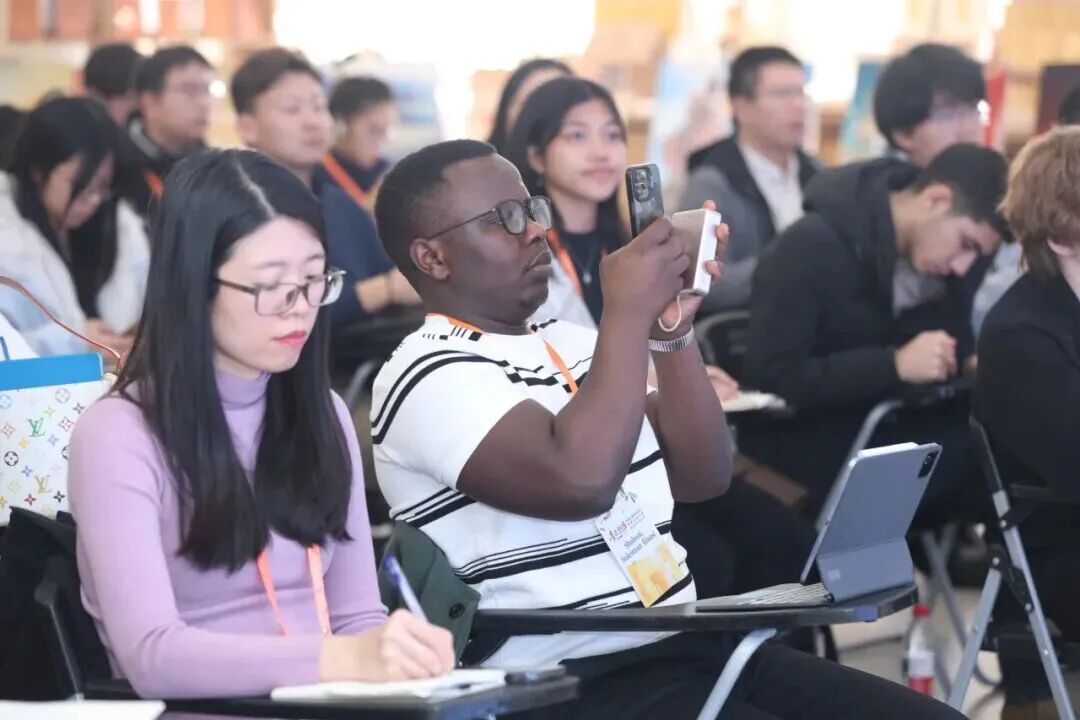
The students are attentively taking notes of the class.
From January 15 to the morning of the 16th, experts including Zhang Yu, a lecturer from KLING, and Wang Hao from Xi'an Jiaotong University, led workshops on cutting-edge topics such as short video creation and the role of AI in new media production. Students engaged in in-depth discussions on the narrative logic of AI-generated content and how AI can optimize the international expression of Silk Road imagery.
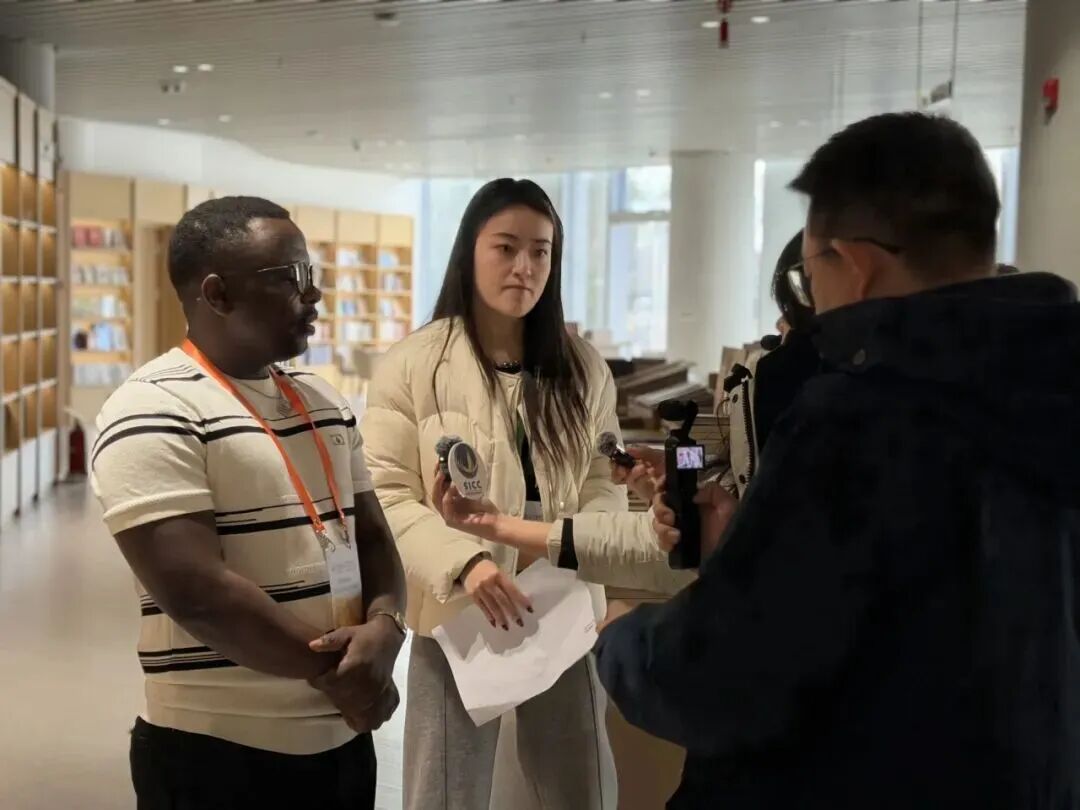
Our school students are being interviewed and sharing what they had learned.
The journey began at the Shaanxi Archaeological Museum, where students captured unearthed relics and simulated sites. International students integrated their own cultural perspectives with Chinese archaeological findings, creating a cinematic dialogue across time and space.
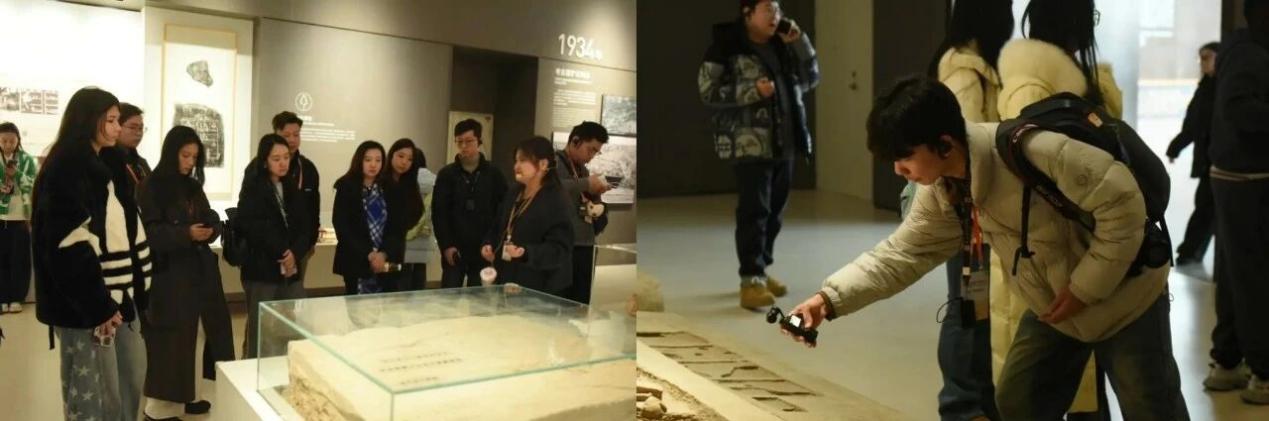
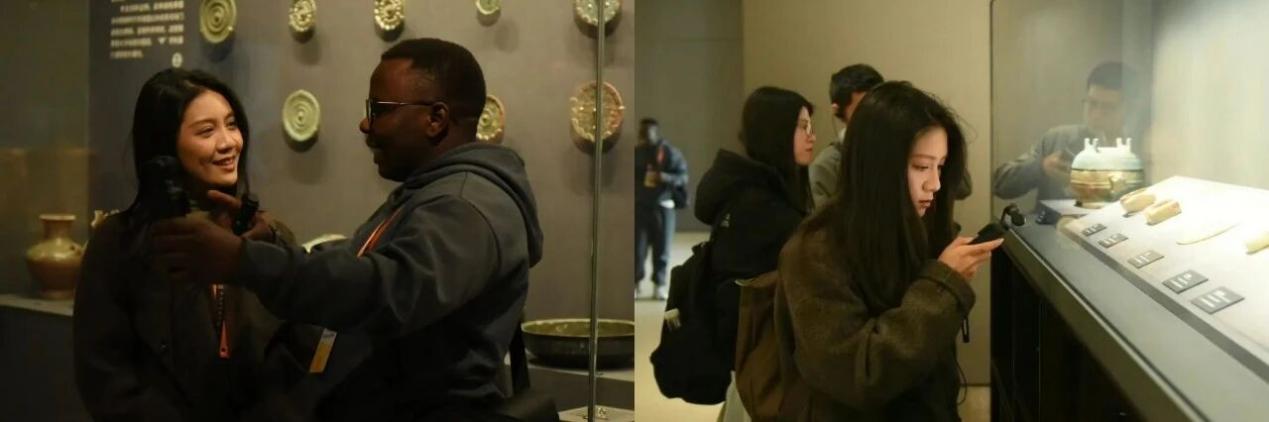
The students are engaged in creating images.
At the next stop, the students arrived at Yisushe Theatre, a historic landmark dedicated to the preservation of Qin Opera. The theater's ancient architecture, the exhibition of traditional costumes, and live performances by intangible cultural heritage inheritors allowed students to fully immerse themselves in the unique charm of this operatic culture. Participants used their cameras to record the fluttering water sleeves of the Qin Opera actors, the charm of their singing styles, as well as the exquisite details of the opera elements such as the painted faces.
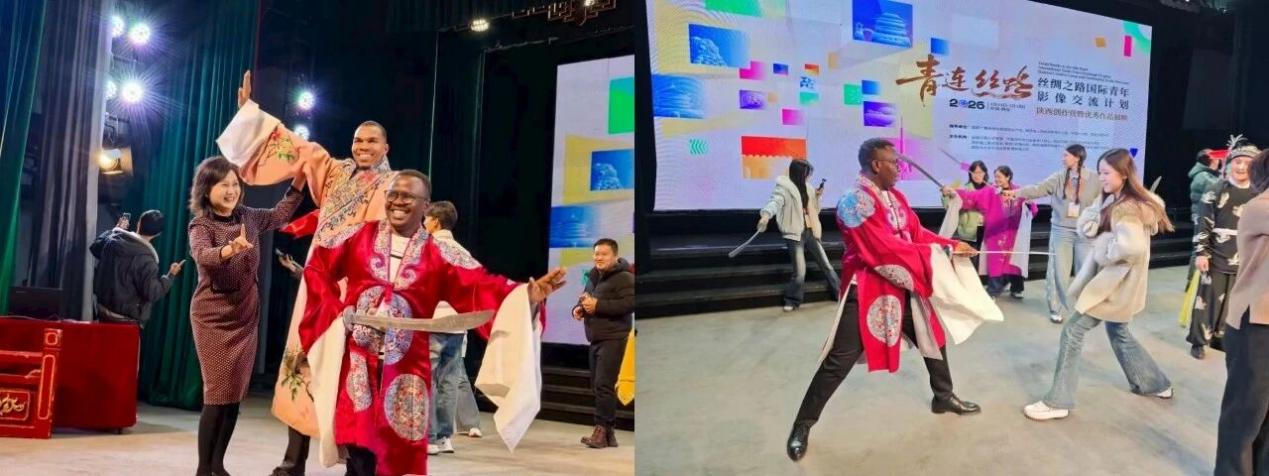
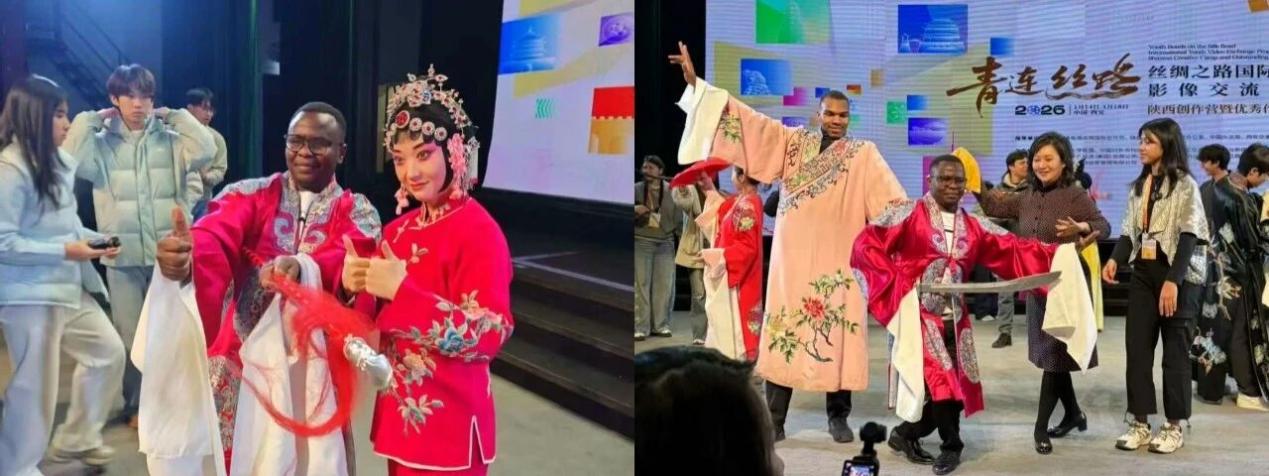
International students are learning the singing techniques of Qin Opera.
The international students were extremely curious about the singing style and movements of Qin Opera. They actively sought advice from the inheritors of intangible cultural heritage regarding the cultural connotations of the opera. Some even put on the costumes and performed the plays, experiencing the artistic appeal that transcends national boundaries through every move and gesture.
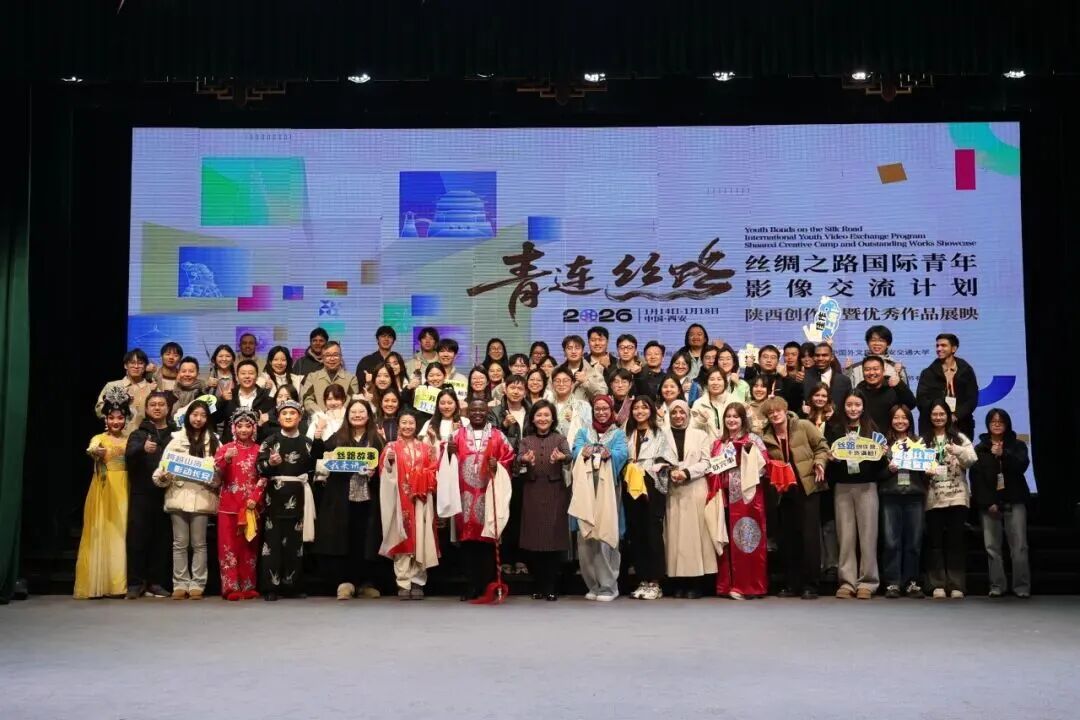
Group photo of the students.
At the Terracotta Army Museum, the magnificent military formations and intricate armor patterns became a focal point. During the visit, the students listened attentively to the detailed explanations given by the tour guide about the layout of the Qin Terracotta Army formation, its historical background, and knowledge about cultural relic protection. From time to time, they stopped to look closely at the modeling techniques of the terracotta figures and recorded the stories of perseverance behind the archaeological excavation and restoration.
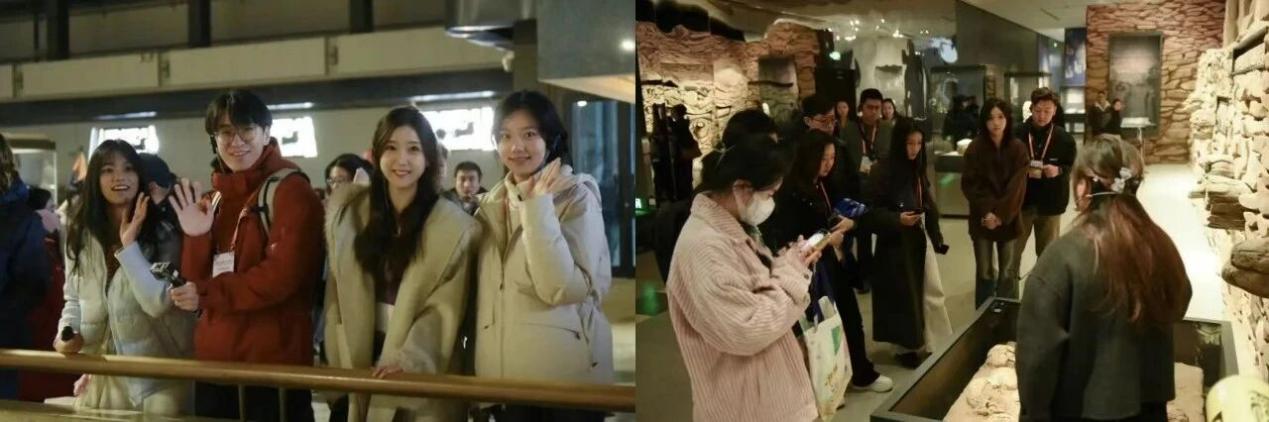
The students were conducting a visit and research at the Terracotta Warriors Museum.
After the visit, the students personally participated in the experience of restoring the pottery figurines: they put on gloves and held professional tools, carefully imitating the operation process of cleaning the attachments on the surface of the pottery figurines and piecing together the fragments. In the slow and meticulous work, they experienced the rigor and difficulty of artifact restoration.
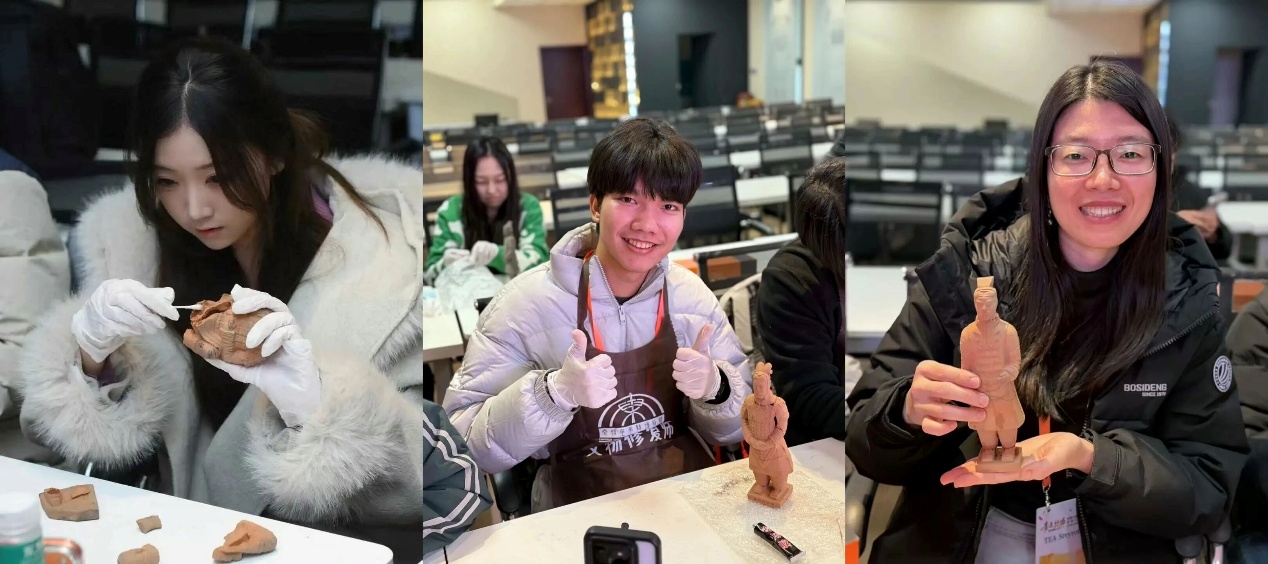 Students are experiencing the restoration of pottery figurines.
On January 18th, the "International Youth Film Exchange Program of the Silk Road" held a showcase of its outstanding works, alongside the official inauguration of the "International Communication University Alliance of the Silk Road." This milestone signals a new phase of systematic, large-scale cooperation among universities along the Silk Road in research, education, and international communication. Zeng Xiangmin, Party Secretary of CUC, attended the ceremony.
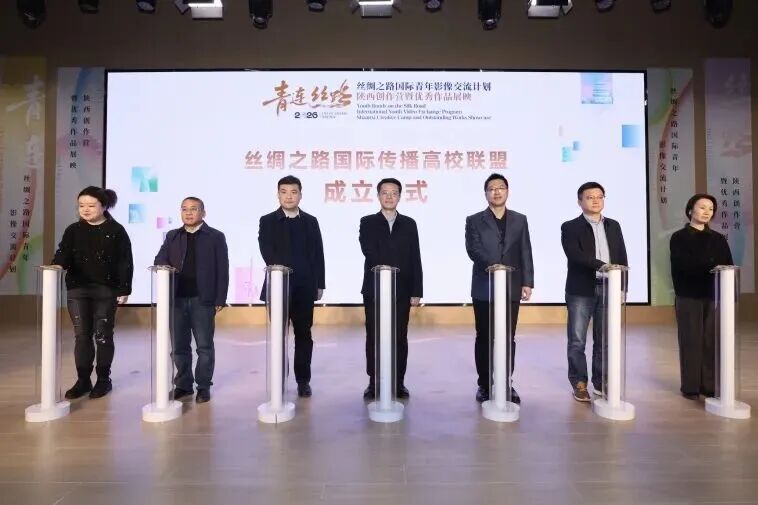
The founding ceremony of the "International Communication Alliance of Universities along the Silk Road".
In the roundtable discussion, the core highlight of the exhibition event, Bu Long, an international student and young creator from CUC, focused on the topic "Turning Encounters into Stories: New Expressions of Young People on the Silk Road through Images" and shared his creative experiences, elaborating on his insights into documenting the development of the Silk Road and conveying the blending of civilizations through images. He also shared cross-cultural narrative techniques and the creation through technological help, generating diverse ideological sparks.
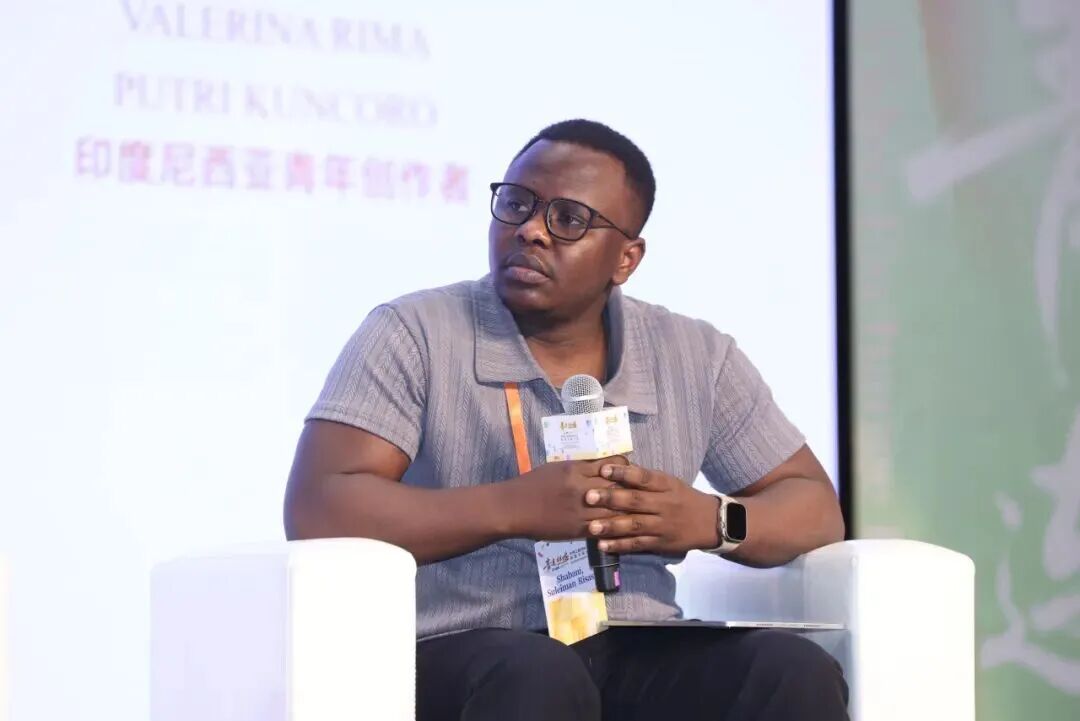
International Student Blon is sharing his thinking.
As a comprehensive international cultural event integrating training, creation, screening and exchange, the "International Youth Film Exchange Program along the Silk Road" provides a high-quality platform for students of CUC to showcase their professional talents and engage in cross-cultural mutual learning and exchange. The students participated deeply in the creative practice and screening and exchange throughout the process. Not only did they hone their international communication skills in AI-assisted image creation and narrative of Silk Road themes, but they also used their youthful images to build a cultural bridge spanning national boundaries and connecting Chinese and foreign youth.
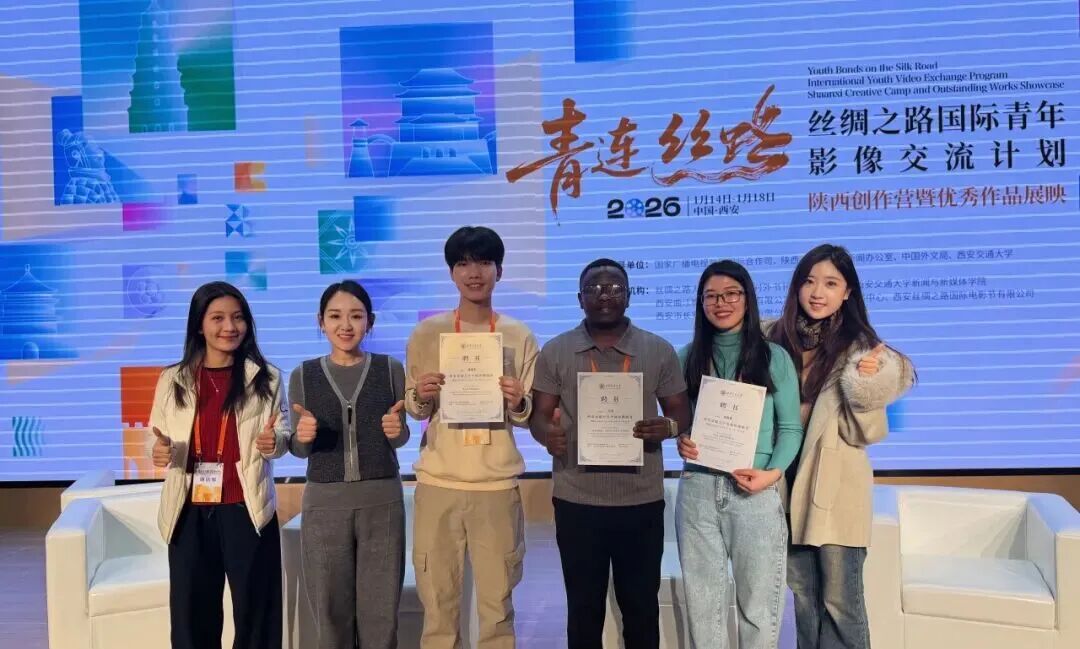
Group photo of teachers and students from the Television school of CUC after the camp concluded.
Participants and faculty members alike shared overwhelmingly positive reflections on the program:
Liu Wen, Associate Professor at the School of Television and head of the International Journalism Master's Program, remarked: "During this camp, our students collaborated with young creators from 15 countries. Through thematic lectures and on-site filming, they exchanged ideas and made significant progress. This process allowed the ‘language of the camera' to become a powerful medium for cross-cultural dialogue. It not only sharpened their professional skills but also strengthened international friendships. We hope students will use this as a starting point to tell Silk Road stories and build a bridge between China and the world through visual storytelling."
Huang Xiaodi, a Master's student from the Class of 2025 studying International Journalism, shared: "As a member of the creative camp, in terms of learning, I have mastered the core skills of using AI to assist in image creation and cross-cultural narrative, and have also set a clear goal of using images to promote international communication; Personally, I've made friends from around the world and learned to embrace diverse cultures, becoming more courageous in my creative pursuits."
Xie Xintong, another student from the Class of 2025, expressed her gratitude for the opportunity: "I am deeply grateful for the chance to explore AI video creation in Xi'an. Our discussions on algorithms and imagery helped me understand the underlying logic of AI-assisted creativity. Witnessing AI restore the original colors of the Terracotta Army showed me how technology can bring history to life in a perceptible way."
Blong, an international student majoring in Digital Communication, noted: "Visiting Xi'an and its film studios—a hub for Chinese cinema—was a long-held dream. Encountering ancient Chinese civilization firsthand was profound. Most importantly, the journey reinforced the importance of preserving history, reminding us that progress begins with learning from our past."
Zhang Lilai, another international student majoring in Journalism and Communication, said, "The trip to Xi'an was both enriching and memorable for me. Being part of this program allowed me to engage closely with young creators from different countries, exchange ideas, and reflect on how stories cantranscend cultural boundaries. Overall, it was not only a valuable creative exercise but also a meaningful moment of personal growth."
Su Ping, another international student majoring in Journalism and Communication captivated by the city's heritage: "Xi'an is full of wonderful memories. I was awestruck by the wisdom of ancient people, especially through the Terracotta Army. Seeing so many people wearing Hanfu was truly elegant and beautiful. I've made lifelong friends on this trip and will miss them dearly."
Editor: Fang Yiran, Zhao Jingjing, Huang Tianyu
Managing Editor: Shao Jianyu
Editor-in-chief: Yu Ran, Yang Zhongtian