




By Ding Weiyi, Meng Lanjuan
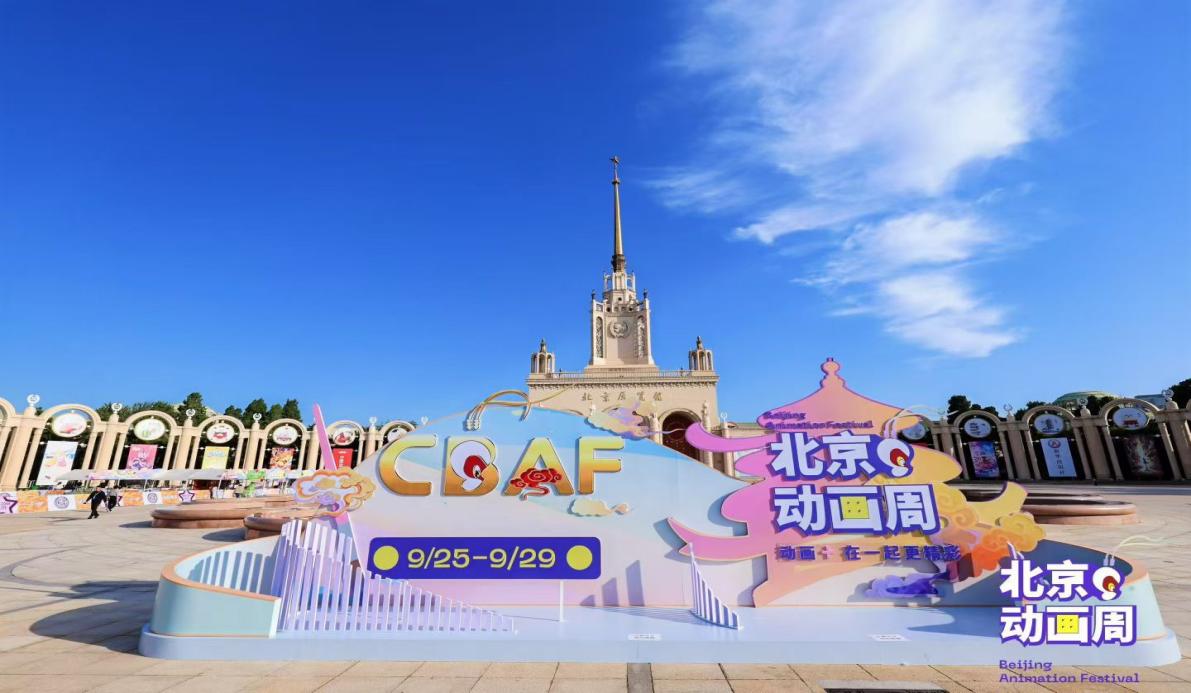
The 2025 China Beijing Animation Festival has the Beijing Exhibition Center as its main venue, with events and activities reaching business districts, industrial parks, cultural tourism centers across the city’s 16 municipal districts and the Beijing Yizhuang Economic and Technological Development Zone.
As golden autumn embraces Beijing, the 2025 China Beijing Animation Festival kicked off on September 25. With the theme "Animation Plus: Together We Shine Brighter", it showcased exhibitions, forums, the 48-hour AIGC original animation challenge, industrial exchanges, and animation screenings, etc. The Animation Festival Forums and Salons also centered on one core proposition— empowering animation creation through Eastern aesthetics, which is deemed essential for fostering the distinctive artistic identity and cultural expression of China's animation industry, as well as for promoting its sustainable development.
Chinese animation's century-long evolution reflects a seamless blend of traditional heritage and technological innovation.Since 1922, when the pioneers of Chinese animation experimented with this art form in a modest studio, it has progressed from hand-traced celluloid frames to AI-powered virtual production.
As a companion exhibition to the Animation Festival, Animating the World: Era Memories and Contemporary Echoes of Shanghai Animationran at Taikang Art Museum in Beijing from July 13 to November 2. On display are over 1,000 precious exhibits spanning nearly eight decades of development at the Shanghai Animation Film Studio, including classic film reels, original animation sketches, models, lightboxes, posters, audio descriptions, and technical documents—such as those detailing ink-wash animation, paper-cut animation, puppet animation, and 4K digital restoration techniques. Also featured are nearly 200 completed scripts for iconic works like Snow Child, The Little Tadpole Looks for Its Mother, Monkeys Fishing for the Moon, and The Shepherd's Flute, which meticulously document shot sequences, dialogue, music, and other production details, serving as the "technical archives" of Chinese animation.
Hand-drawn animation art, defined by its concise lines and expressive movements, conveys delicate emotional depth—most notably in the tear-jerking masterpiece Snow Child through its hand-drawn sketches. Inspired by traditional woodblock printing, ink-wash animations such as The Little Tadpole Looks for Its Mother and The Shepherd's Flute brought the art of Chinese ink painting to global audiences via dynamic imagery. In the 1970s, artists innovated ink-wash fiber-pulled paper-cut animation. By pulling fibers from the edges of ink-washed paper cutouts, they created a "fluffy" texture for animal puppets, with Monkeys Fishing for the Moon standing as a prime example of this highly decorative technique. Together, these exhibits illustrate a core truth: every technological leap in Chinese animation has been rooted in profound reverence for art and classic works, blending innovation with heritage seamlessly.
Mythology-based animations are a key vehicle for traditional culture to empower China's century-old animation. An 'Era Memories of Chinese Animation' research by Communication University of China shows that among people born from the 1960s to the 2000s, 89% of respondents regard Havoc in Heaven (1961) and Nezha's Triumph Against the Dragon King (1979) as classic works of Chinese animation. Adapted from mythological stories, these two works have successfully bridged the generation gap and become shared cultural memories among people of different age groups. They also ranked first and second respectively in the vote for "The Classic You Want to Watch Most" launched on the official WeChat account of the Animation Festival's "Childhood Screening Room".
Havoc in Heaven (1961) and Nezha's Triumph Against the Dragon King (1979) are milestones in the history of Chinese animation; they have shaped iconic characters with a distinctive artistic style, profoundly influencing the aesthetic of Chinese animation.Nezha's Triumph Against the Dragon King (1979) and Nezha 2both depict the protagonist as a champion who rises up against tyranny and dedicates himself to protecting the vulnerable populace. AndNezha 2 lays greater stress on Nezha's personal growth and self-redemption, thereby achieving a more profound resonance with the spiritual demands of modern audiences.
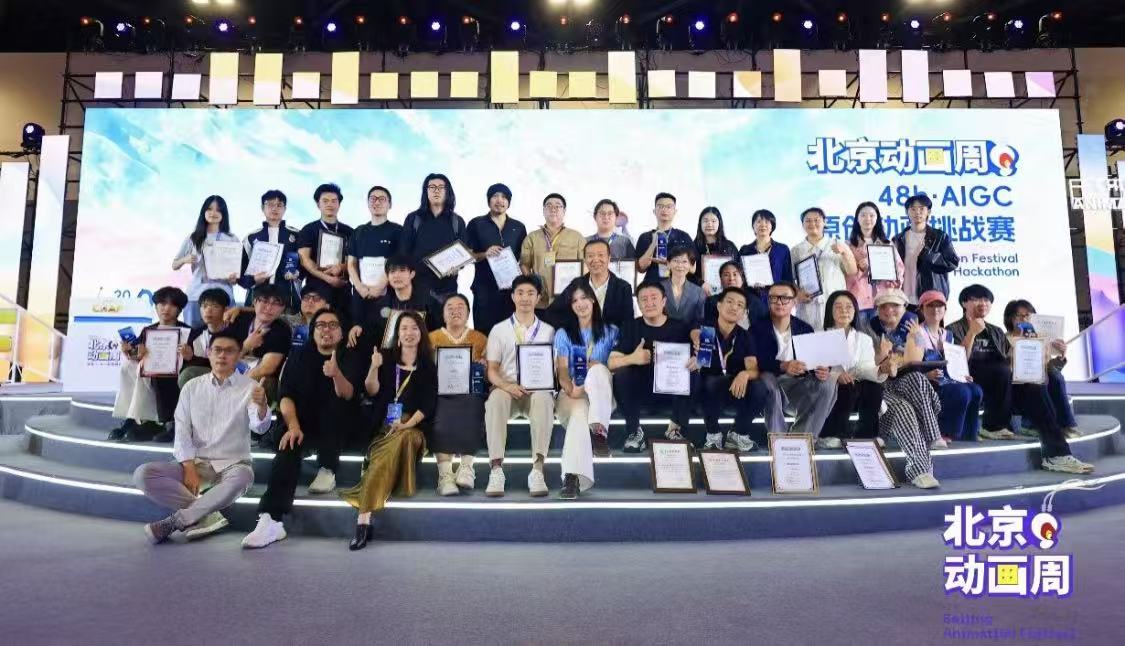
The Metaverseteam secured the title of 'Best AI Super Creator' for their workThe Ridge Beast Whose Name Is Always Forgotten in the 48-Hour AIGC Original Animation Challenge.
The artistic legacy of Nezha's Triumph Against the Dragon King (1979) is featured in a special exhibition section dedicated to this film at the 2025 China Beijing Animation Festival. The production team hand-drew over 58,000 original frames, among which the iconic "sea-splitting" scene where Nezha parts the sea with his magic weapon has been widely acclaimed by audiences and critics over the decades. To create this scene, the team spent months on physical experiments: they used folded paper to simulate wave shapes and built a dynamic model of water ripples. This combination of practical research and artistic creation resulted in a unique animation style that integrates the beauty of lines in Chinese painting and ink-wash blending, creating a fluid, dynamic aesthetic within animated films.
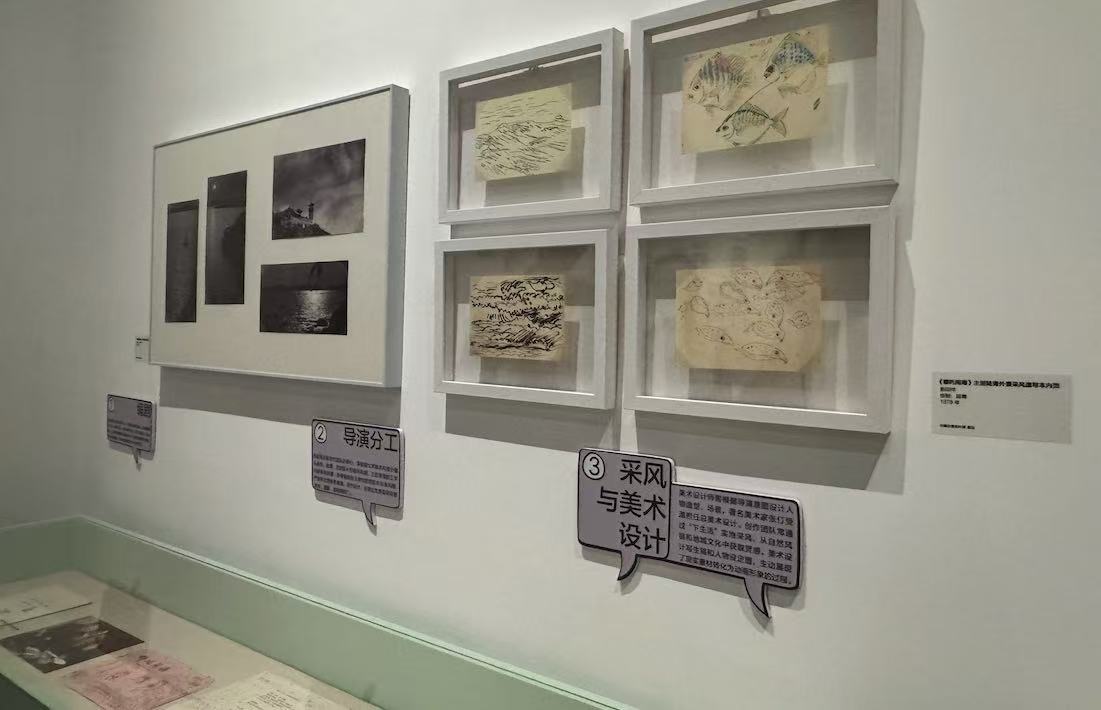
The display case for field research and art design showcases the wave and fish details from Nezha's Triumph Against the Dragon King (1979) at Animating the World: Era Memories and Contemporary Echoes of Shanghai Animation.
Leveraging cutting-edge AI technology to revitalize traditional culture, record-breaking Chinese box-office smash Nezha 2 pushes the boundaries of visual storytelling. The film enlisted over 4,000 animators nationwide for special effects production. In its climax, the battle between Immortal Wu-Liang and the dragon clan features 200 million characters—no two identical, each with distinct silhouettes and movement patterns. This relentless attention to detail embodies the dedication of Chinese animators, who breathe life and soul into their works frame by frame.
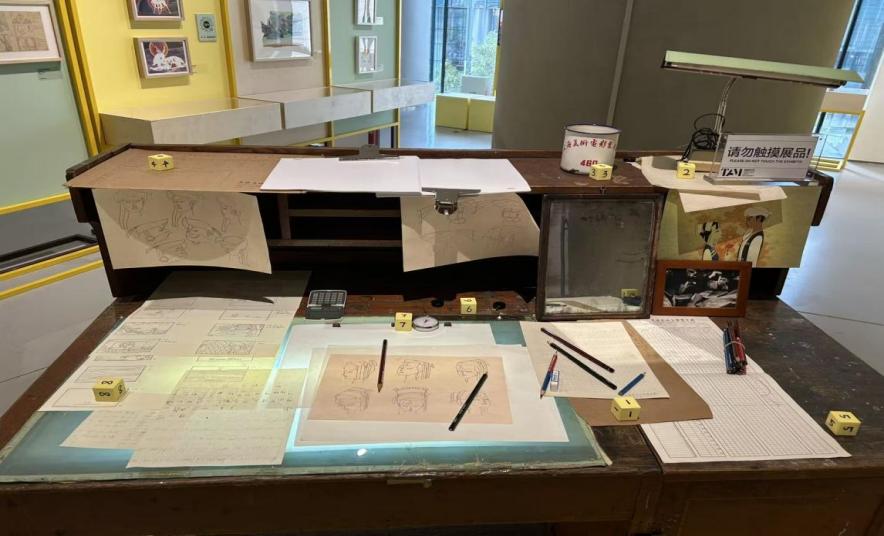
The original lightbox and accompanying artefacts such as character design sketchesand exposure sheet at Animating the World: Era Memories and Contemporary Echoes of Shanghai Animation, vividly restores the working environment of the veteran artists at the Shanghai Animation Film Studio back in the 1980s.
Ma Li, President of the China Animation Association, emphasized at the opening ceremony and keynote forum of the 2025 Beijing Animation Festival that Chinese animation must achieve a leap from "Made in China" to "Created in China" through technological empowerment and cultural cultivation, thereby better conveying Chinese narratives and Eastern aesthetics.
Among the 48 Chinese animated films screened for free at the festival, half were based on traditional Chinese mythology. Audiences witnessed a century of evolution and advancement in Chinese animation techniques, and saw the power of Chinese creativity. These include the Tales of Chinese Mythology Series, The Legend of Sealed Book, The Temple of Lanruo, The Legend of the White Snake: The Beginning, The Legend of the White Snake 2: The Green Snake's Revenge.
By transforming traditional mythologies and ancient tales into stories ofengrossing plots and relatable emotions for contemporary audiences, animators continue to draw inspiration from China's rich cultural heritage, cultivating this fertile ground to tell more Chinese stories through Eastern aesthetic lenses and masterful craftsmanship. For example, the little monsters in Langlang Mountain(2025) are rendered from humble beasts to inspiring heroic figures, embodying the spirit of "never giving up”. Premiered on Bilibili on 1 January 2026, the much-anticipated short film How to Become Three Dragons argues that genuine "Dragonhood” is measured neither by rank nor spell-power nor worshippers' gifts, but by the resolve to repay every blessing and, when the moment comes, to lay down one's life for the common good.
At the 2025 China Beijing Animation Festival, where yellowed film reels stand alongside cutting-edge AI creations, a clear truth emerges: the animation industry is entering an era of AI-empowered intelligent imagery. While the line between AI and traditional animation blurs, the imagination, innovation and aesthetic sensibilities of human artists remain irreplaceable. As immersive AI technology brings Nezha's fire-tipped spear to life—bridging virtual and real worlds—it symbolizes more than technological progress. It heralds the vivid rebirth of China’s traditional aesthetics in the digital age, proving that when heritage meets innovation, Chinese animation will continue to shine brighter, telling stories that resonate across time and borders.
Editor: Li Shuxuan, Fang Yiran
Managing Editor: Meng Lanjuan
Editor-in-chief: Yu Ran, Yang Zhongtian