






By Cao Shiqi and Tang Huirun
BEIJING, Dec. 6 — The School of International Studies (SIS) at the Communication University of China (CUC) hosted a forum on December 6th focusing on the development and innovation of bilingual broadcasting and anchoring education. The event explored how media education can evolve to meet the growing demands of cross-cultural communication in today's complex global media landscape.
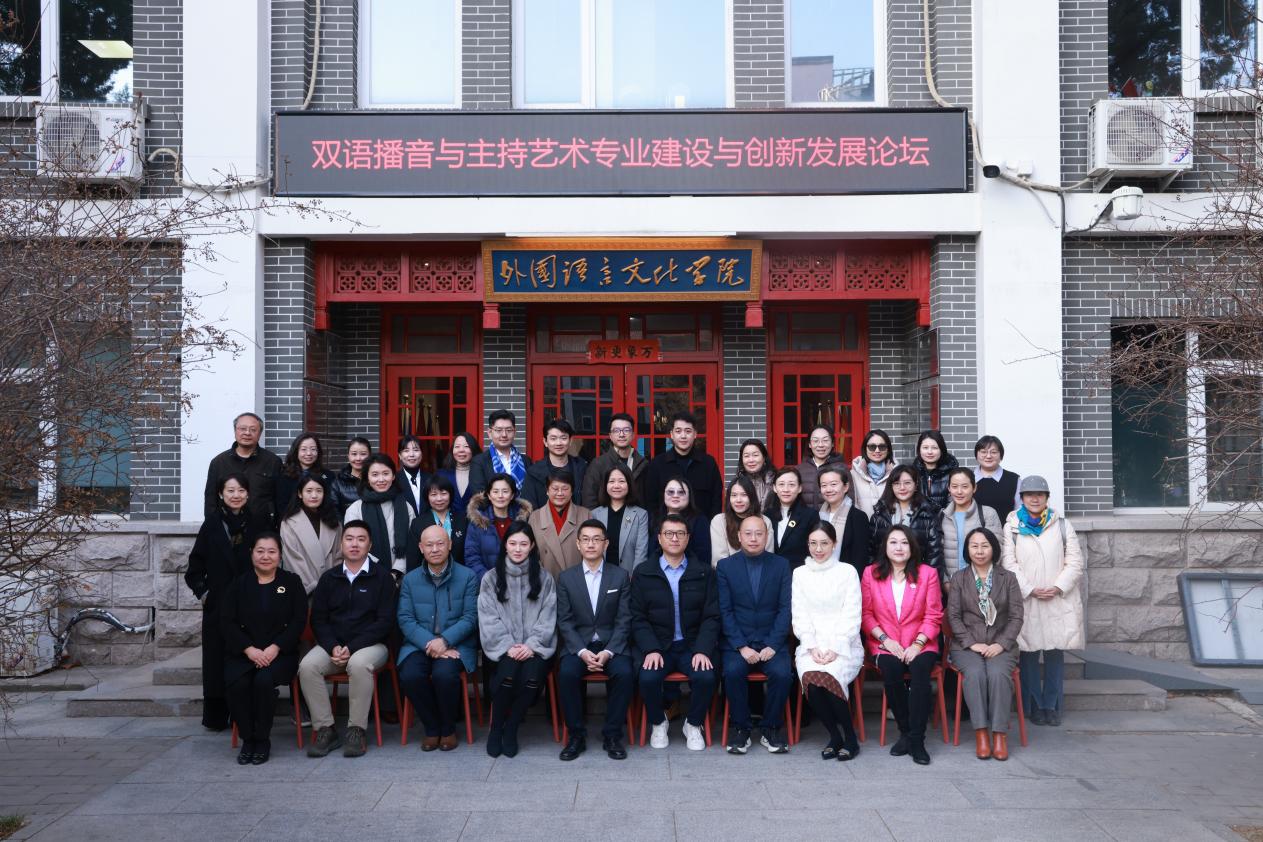
Group photo of forum guests at the School of International Studies, CUC.
Centered on program development, professional innovation and the cultivation of international-oriented talent, the forum brought together experts from academia, leading media organizations and related industries. Discussions focused on new approaches to training bilingual communicators equipped to engage international audiences.
Representatives from China Media Group (CMG), Xinhua News Agency, China Daily and other institutions shared insights into the evolving expectations for bilingual media professionals amid rapid technological advancement and media convergence.
In her opening remarks, Professor Wen Chunying, Dean of the School of International Studies, reflected on CUC's pioneering role since establishing China's first English broadcasting program in 1964. The university has now developed a comprehensive bilingual program matrix covering Chinese–English, Korean, Spanish, and Japanese tracks in Broadcasting and Anchoring..
She emphasized that these programs have provided skilled professionals to media outlets and international communication platforms, strengthening China's global media engagement. Professor Wen noted that bilingual broadcasting professionals carry a dual mission: facilitating cross-cultural dialogue and effectively communicating China's perspectives worldwide.
This mission, she added, requires continuous refinement of curricula, teaching methods, and practical training to ensure graduates meet international standards. She also highlighted the school's enhanced practical teaching platforms, including phonetics labs, editing studios, and intercultural communication labs, supported by a competency framework that bridges academic training with real-world practice.
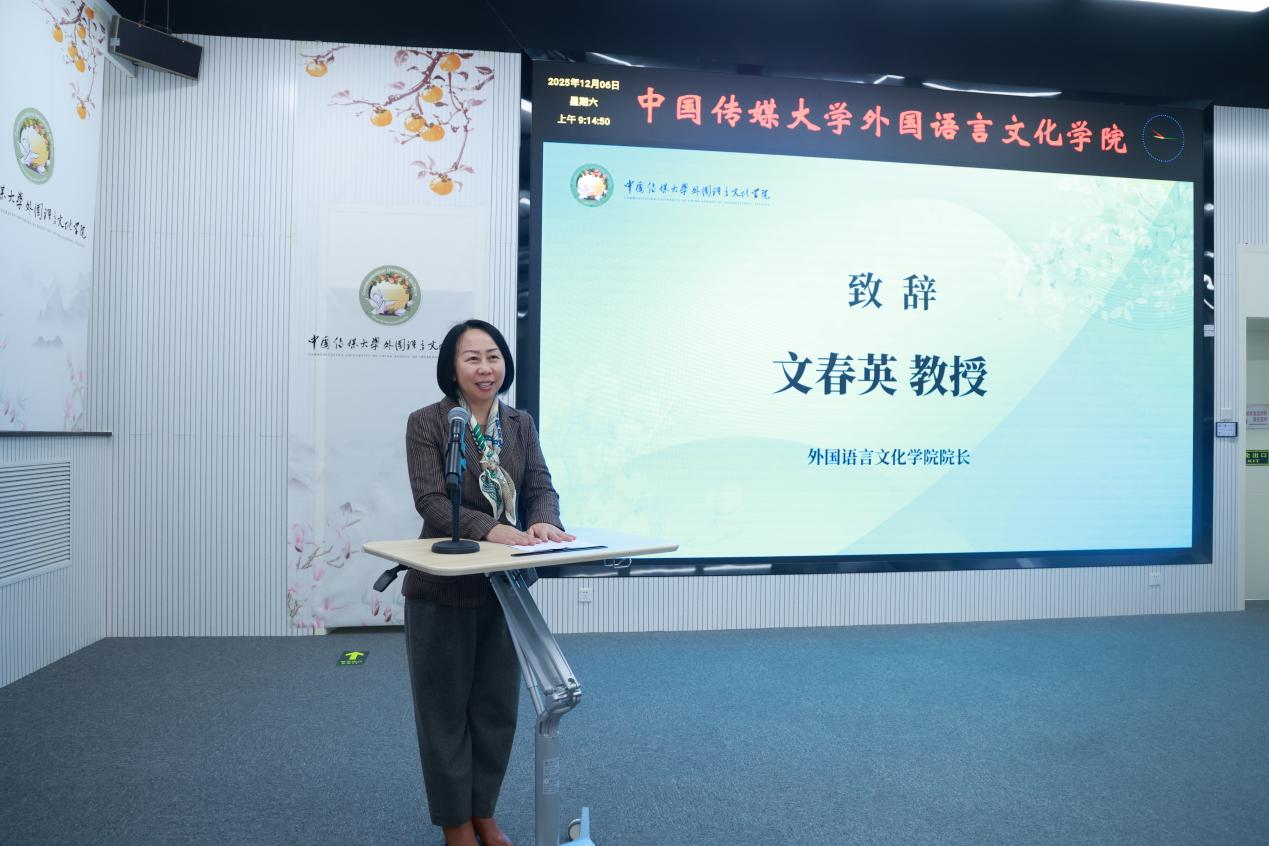
Professor Wen Chunying delivers opening remarks.
During the keynote session, Zhang Cheng, Chief Editor of the News Center at China Media Group and a CUC alumnus, outlined a development path for bilingual media professionals. He explained that bilingual broadcasting is not merely about using two languages, but an integrated professional skill combining cultural insight, language competence and journalistic judgment. Zhang encouraged students to strengthen their communication effectiveness through international exchanges, overseas internships, and field reporting.
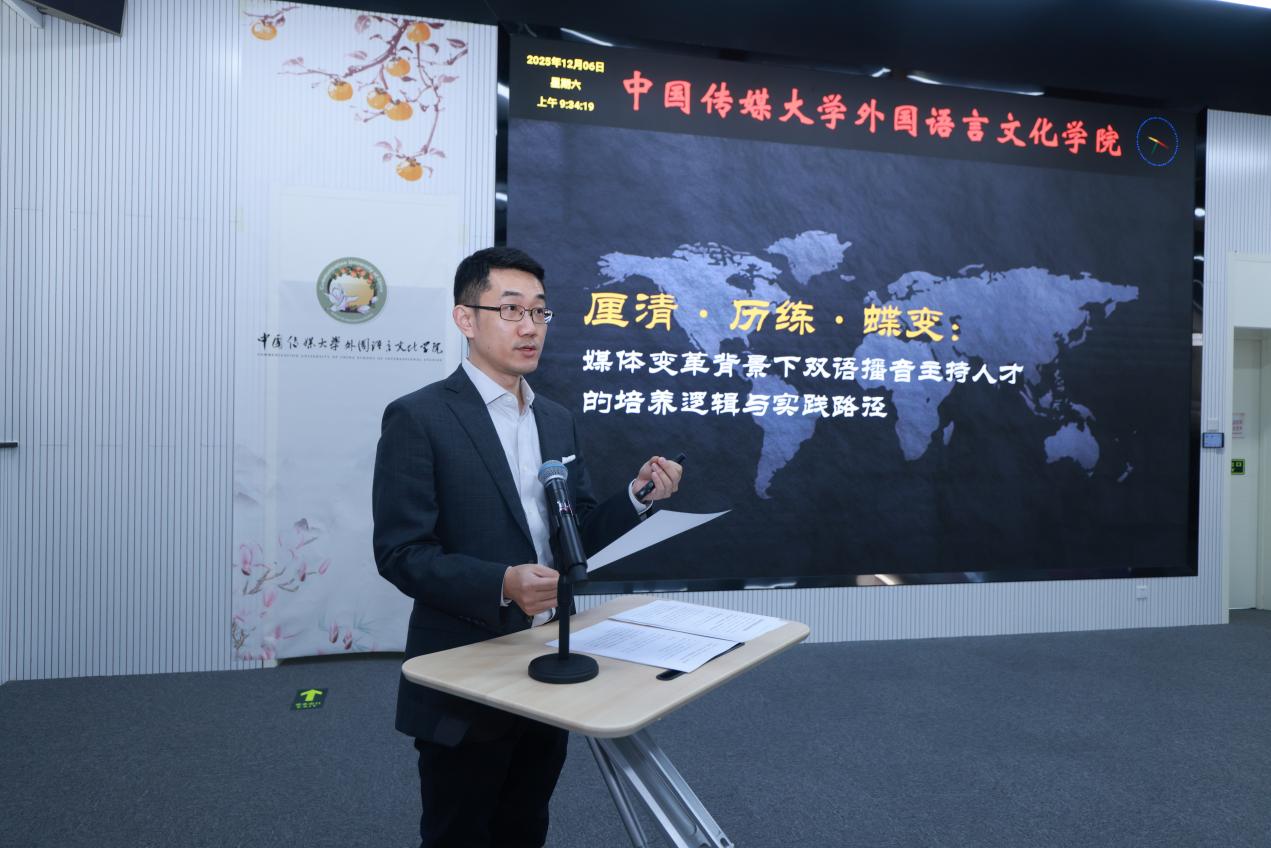
Alumnus Zhang Cheng shares insights on building global media competencies.
From an industry perspective, Fei Fan, Director of the Digital Finance Department at China Export & Credit Insurance Corporation, emphasized that effective international communication requires not only language proficiency but also cross-cultural understanding, strategic thinking and the capacity to build trust across diverse audiences.
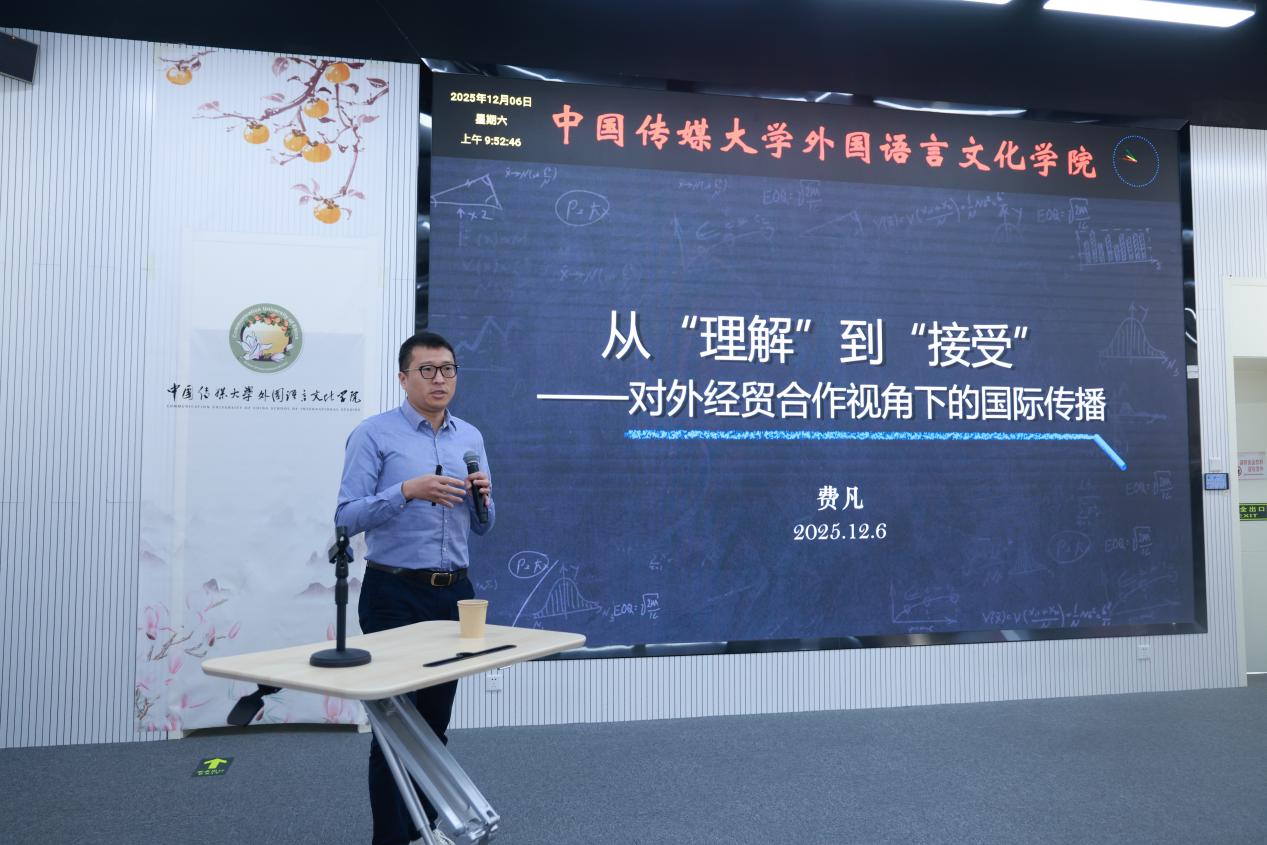
Fei Fan discusses essential cross-cultural communication skills.
The forum was moderated by Xie Fei, Vice Dean of the School of International Studies, and featured four parallel sub-forums dedicated to Chinese–English, Chinese–Korean, Chinese–Spanish and Chinese–Japanese bilingual programs.
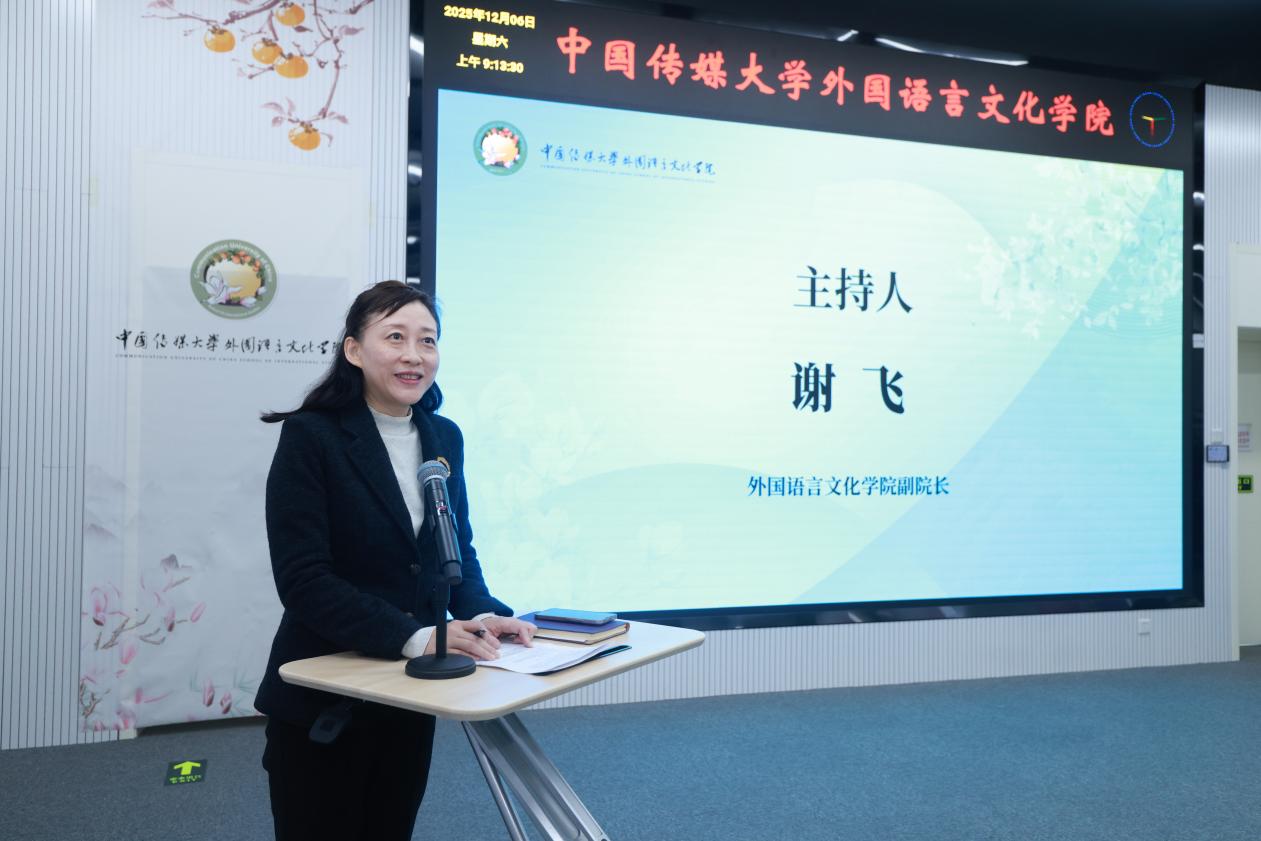
Xie Fei, Vice Dean of SIS, moderates the forum session.
Discussions covered curriculum innovation, interdisciplinary training and the integration of digital technologies, reflecting the evolving needs of the global media industry. Experts agreed that modern international communication is increasingly shaped by multi-platform dissemination, AI integration and cross-cultural complexity, calling for professionals who blend language proficiency with content creation, digital literacy and global awareness.
Wang Haolin, a student from the Class of 2025 majoring in Chinese–English Bilingual Broadcasting and Anchoring, said the forum expanded his perspective on career pathways. "True competitiveness means making sure our voice is not only heard but truly understood globally," he remarked.
Tang Aihua, head teacher of the Class of 2023 in the same program, noted that the forum and exchanges with alumni strengthened students' confidence and motivation. She shared that graduates now work across media, international organizations, finance, education and cultural sectors, with about half pursuing further studies domestically or abroad.
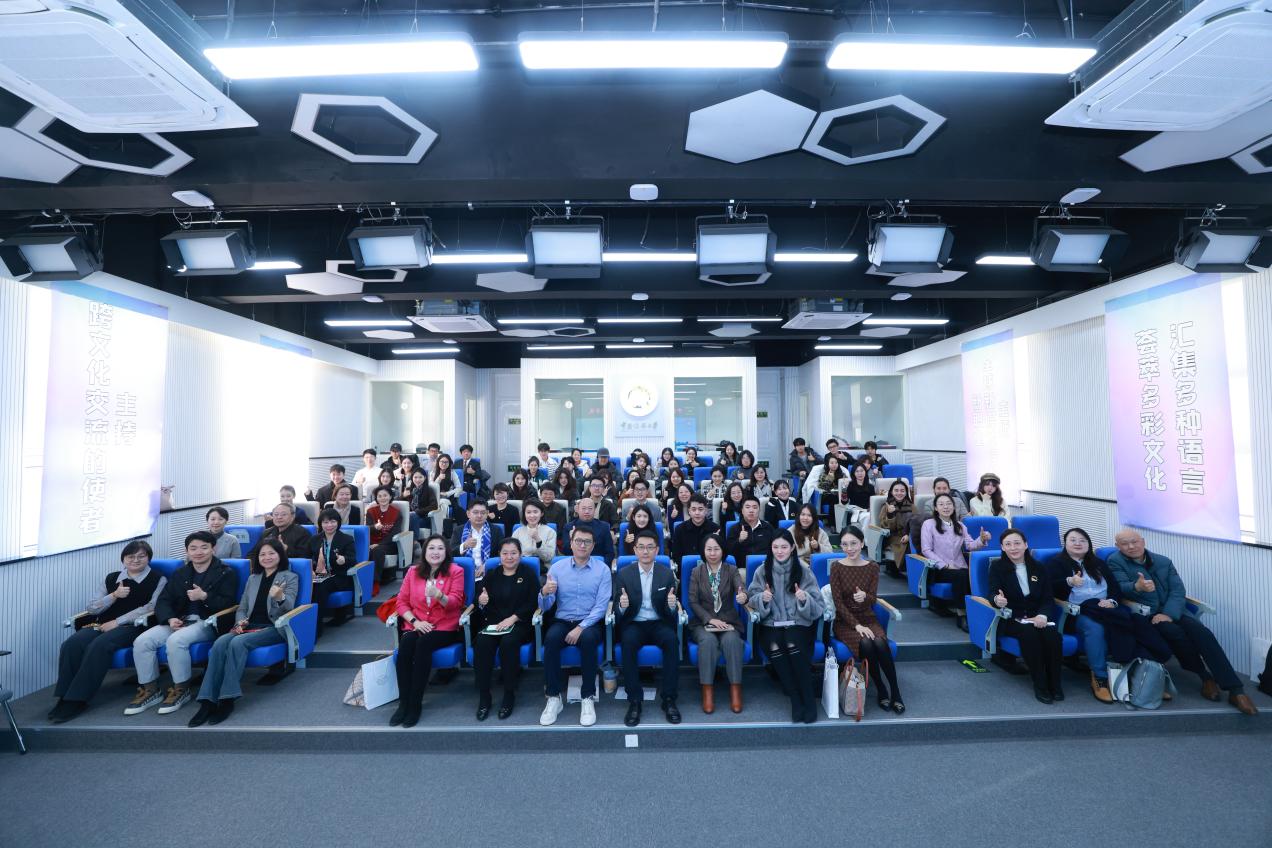
Forum participants gather for a group photo at CUC.
The forum has laid a solid foundation for future collaboration between academia and industry. Moving forward, the School of International Studies will establish an annual dialogue mechanism with leading media and multinational organizations to ensure curriculum remains aligned with real-world needs. Through sustained dialogue, the forum contributed to the ongoing development of bilingual broadcasting education. The School will continue to promote multilingual integration, expand practical opportunities, and refine its talent cultivation system to foster a new generation of communicators who can navigate, shape, and humanize global discourse.
Editor: Li Shuxuan, Fang Yiran
Managing Editor: Tang Huirun
Editor-in-chief: Yu Ran,Yang Zhongtian