



By Dai Leying
Scholars and industry experts gathered at Communication University of China (CUC) on January 10 to discuss the role of media in building a China-ROK (the Republic of Korea) cultural community. The seminar, titled "China-ROK Media Content Exchange and Cultural Community Building," fostered in-depth academic dialogue. Participants identified key pathways for future media cooperation and explored ways to enhance mutual cultural trust in the digital age.
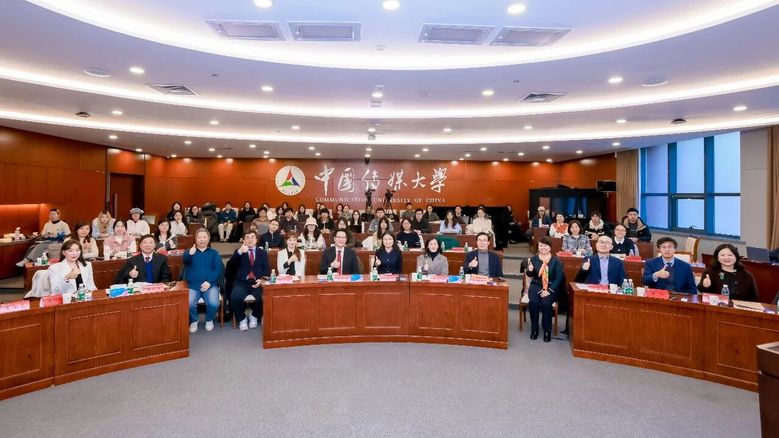
Co-organized by the Institute for a Community with a Shared Future for Mankind, School of Economics and Management and School of Humanities, the symposium attracted more than 50 scholars and experts from China andthe Republic of Korea.
In the opening address, Li Huailiang, Dean of the Institute for a Community with Shared Future at CUC, emphasized the need for China and the Republic of Korea (ROK), as major forces in the digital economy and media industry, to collaborate on building platforms adapted to the new media environment. He called for both sides to create more high-quality content and to use the power of media to build a bridge of mutual trust. This, he stated, would advance the construction of a cultural community, stabilize the China-ROK strategic cooperative partnership, and gather spiritual strength for the development of both nations.
Wang Yong, Dean of the School of Humanities, emphasized that the resonance between Chinese and South Korean literary and artistic creation stems from the mutual learning of humanistic spirits. He said that the School of Humanities has long been committed to cultivating media talents with profound humanistic qualities, and focusing on stories of ordinary people and the aspirations of the young generation to build a bridge between people of the two countries. He called for exploring the modern value of traditional culture and establishing an open and inclusive dialogue mechanism for China-ROK cultural and media exchanges.
Ju Seong-min, President of the Korean Media Policy Society and Dean of the School of Media and Communication at Chonnam National University, noted that China's media content production has improved rapidly, reaching and even setting international advanced standards in some areas. He called for updating traditional cooperation models and exploring more advanced paths for cooperation with a global vision in the media and cultural sectors.
Bu Yanfang, professor at the School of Economics and Management of CUC, reviewed policy changes in media and cultural communication over the 33 years since the establishment of diplomatic relations between China and theRepublic of Korea. She pointed out that although media culture and exchanges have fluctuated due to geopolitical and political influences, they have remained resilient in many areas, including market-driven industrial complementarities, grassroots emotional bonds, streaming media exchanges, and educational and academic policy support.
From the ROK perspective, researcher Jung Hye-yoon of Korea University emphasized the significant win-win potential of integrating long- and short-form dramas through AI technology,identifying it as a key area for China-ROK cultural and media cooperation in the future.
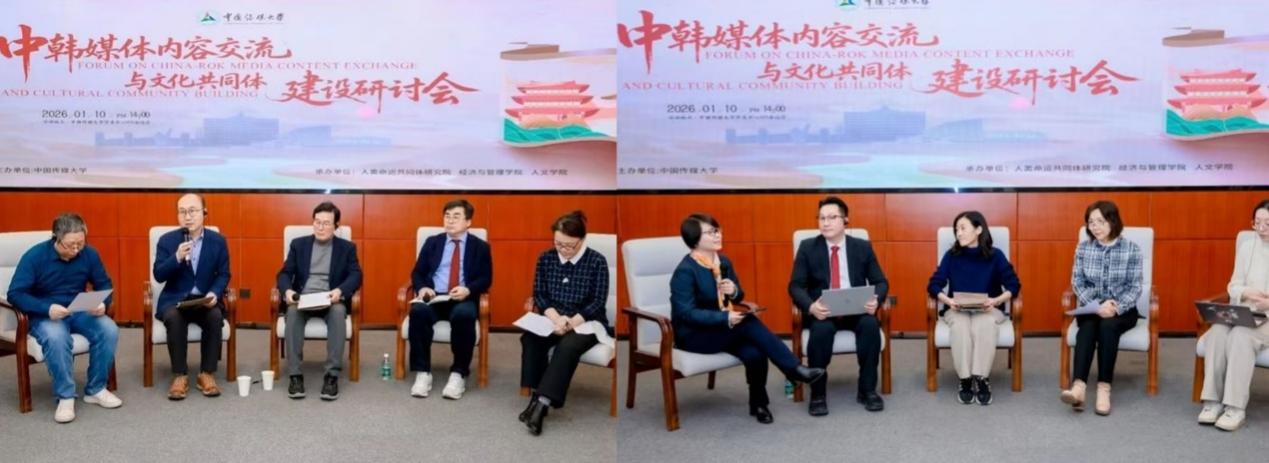
Panel discussions focused on the dissemination, reception and recognition of Korean cultural products in China, as well as building mechanisms for cultural mutual trust and cooperative development between China and the ROK in the digital intelligence era.
Panel discussions yielded fruitful consensus among experts and scholars regarding the dissemination and reception of Korean cultural products in the Chinese market, as well as the construction of cultural mutual trust and cooperation mechanisms in the digital and intelligent era. Representatives from Inha University, Chonnam National University, Korea University, Dongseoul University, Sogang University, and CUC shared their insights during these sessions.
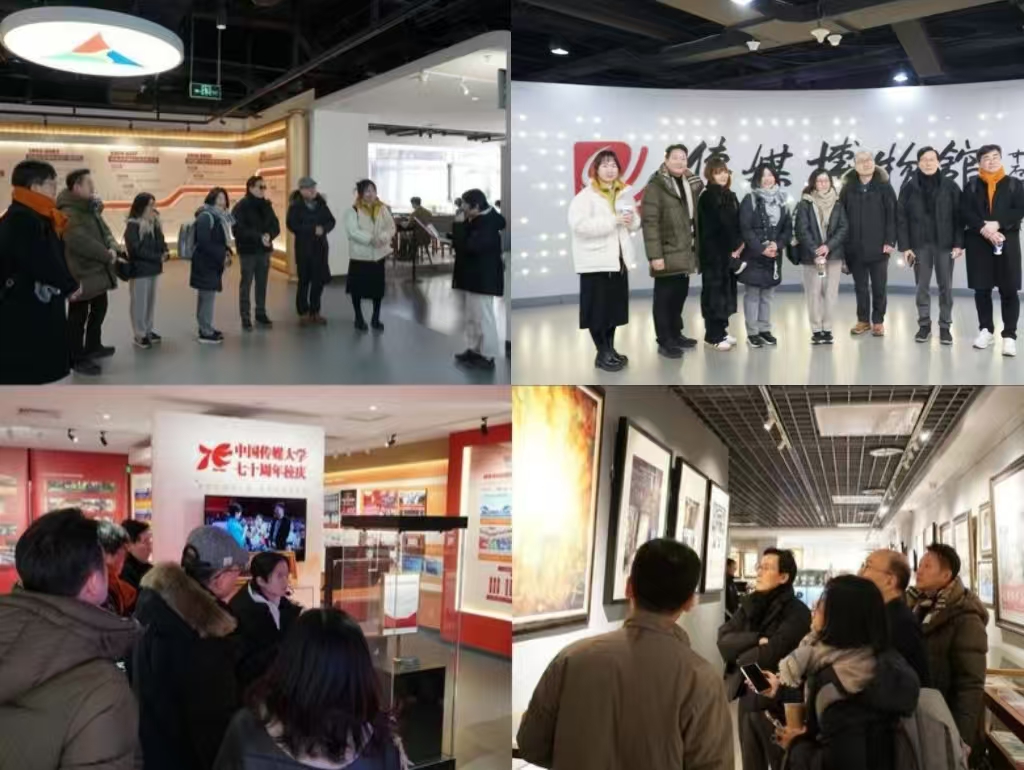
The delegation visited CUC's History Museum, Media Museum and Cui Yongyuan Oral History Research Center after the meeting.
This seminar helped chart a clearer course for media content cooperation between the two countries. Going forward, both sides agreed to advance high-quality content creation, boost academic-industry collaboration, and build resilient cooperation mechanisms to deepen mutual cultural trust.
Editor: Li Shuxuan, Fang Yiran
Managing Editor: Meng Lanjuan
Editor-in-chief: Yu Ran, Yang Zhongtian