



During the opening period of the 2026 China-ASEAN Education Week, the"2026 Seminar on China-ASEAN International Talent Development and Smart Education in the Digital Era" was held in Guiyang, Guizhou Province. The seminar was jointly organised by the Center for International People-to-People Exchange of the Ministry of Education of China and Communication University of China.
The seminar focused on trends in educational transformation in the digital era and featured discussions on international talent development, smart education and regional educational cooperation. Nearly 160 representatives from education authorities and universities in China and ASEAN countries, industry experts and scholars, and international organisations attended the event. Ren Mengshan, Vice President of CUC, led the university delegation. Jin Yong, Chair of the School of Government and Public Affairs, Dong Yuting from the Office of International Exchange and Cooperation, and Peng Rui from the School of Government and Public Affairs also attended.
Dialogue on International Education
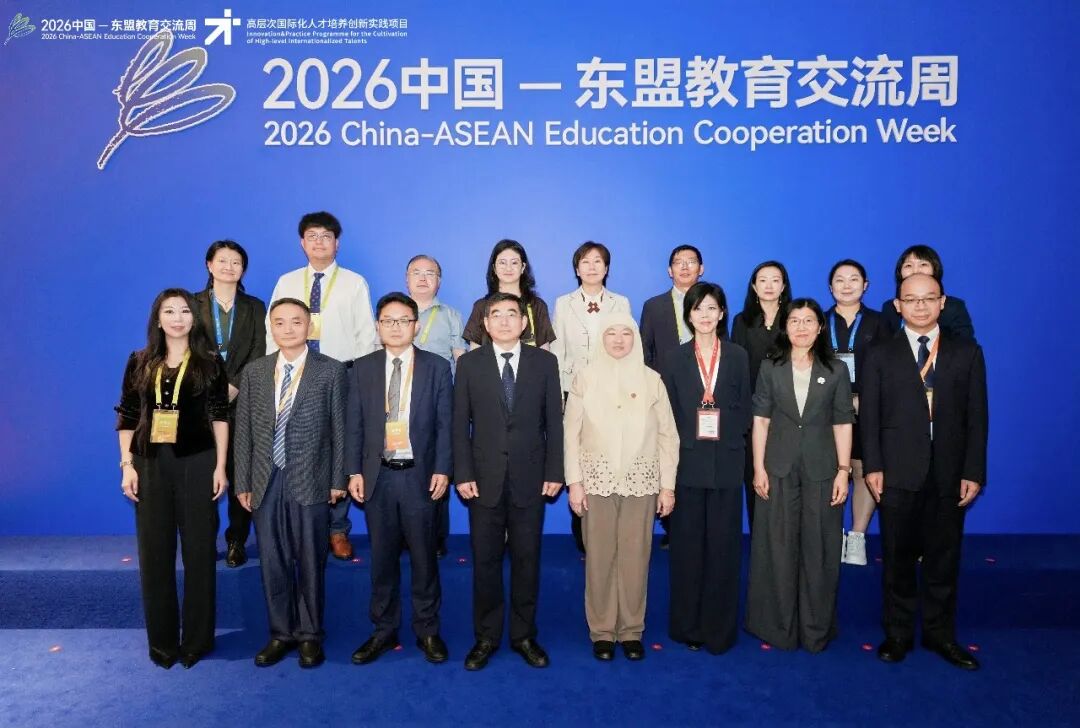
Ren Mengshan and Jin Yong attended a meeting with Dr. Datuk Habibah Abdul Rahim, Secretary-General of the Southeast Asian Ministers of Education Organization (SEAMEO), and her delegation. Ren Mengshan expressed appreciation for SEAMEO's long-standing efforts to promote educational cooperation across Southeast Asia and introduced CUC's educational characteristics and international development.
He noted that CUC has established a solid foundation for cooperation with Southeast Asian countries in academic exchange and talent development. Going forward, the university will focus on jointly organising high-level international academic conferences to contribute to the development of regional academic communities; strengthening coordinated cooperation in international-organisation talent development; and upgrading student exchange and joint training programmes. These efforts will expand opportunities for student exchanges among universities in China and Southeast Asia, improve cross-border credit recognition mechanisms, and deepen multi-level, regular joint training, thereby promoting greater people-to-people understanding among younger generations.
Opening Ceremony: New Opportunities for Cooperation
At the opening ceremony, Liu Yong, Deputy Director-General of the Department of International Cooperation and Exchange of the Ministry of Education of China; Jiang Yang, Education Inspector of the Department of Education of Guizhou Province; Yu Changxue, Director of the Center for International People-to-People Exchange of the Ministry of Education; Ren Mengshan, Vice President of CUC; Tanvir Ahmad Bhatti, Consul General of the Islamic Republic of Pakistan in Chengdu; and Shakeel Ahmad, Deputy Country Director of the United Nations Development Programme (UNDP) Country Office in Cambodia, delivered remarks.
In a video address, Liu Yong said that China and ASEAN should deepen practical cooperation in education, while encouraging universities to leverage their disciplinary strengths, build platforms for cooperation, and jointly cultivate highly qualified talent for regional development.
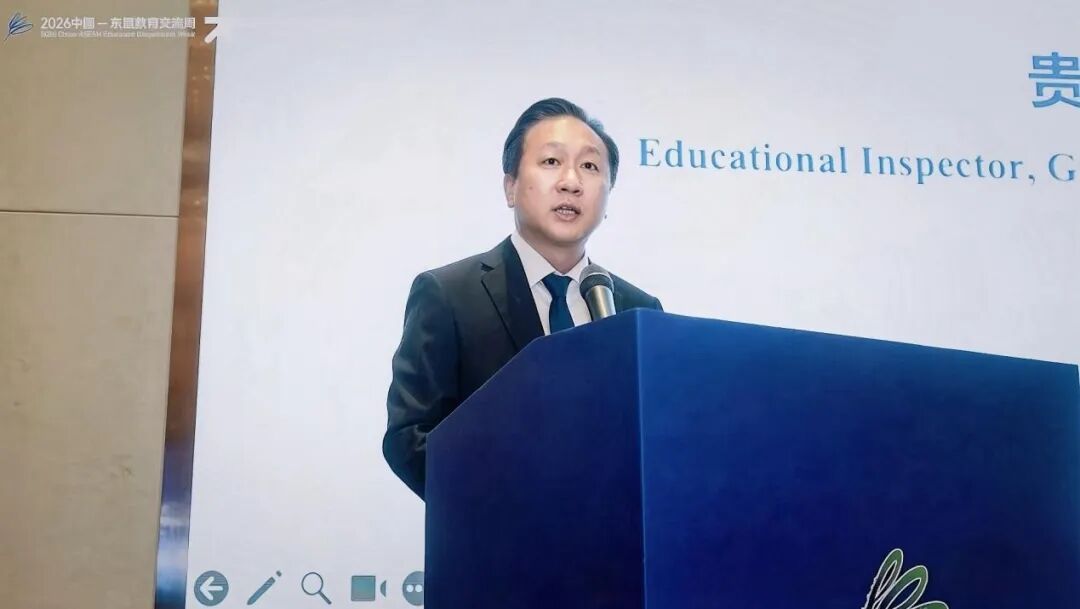
▲Jiang Yang, Inspector of the Guizhou Provincial Department of Education
Jiang Yang said that the seminar, focusing on the "digital era" and "international talent development," was both a practical response to new developments in educational cooperation among China, ASEAN and the wider international community and a concrete action to implement China's 15th Five-Year Plan for Education Development.
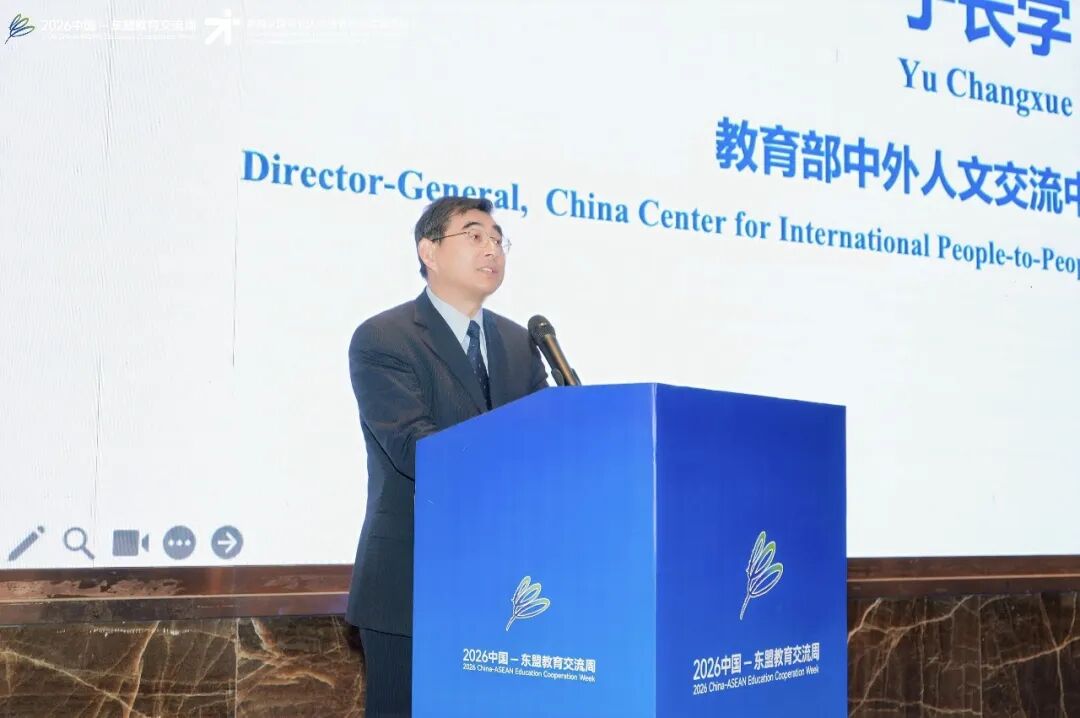
▲Yu Changxue, Director of the Center for International Exchange of Humanities under China's Ministry of Education
Yu Changxue said the conference aimed to exchange ideas, build consensus and address the important questions of what kind of international talent should be cultivated in the digital era and how such talent should be developed. He called for a comprehensive understanding of the new environment, active exploration of new approaches, and continued emphasis on people-to-people exchange, so as to jointly cultivate high-level international talent and contribute educational wisdom to building a closer China-ASEAN community with a shared future and a community with a shared future for humanity.
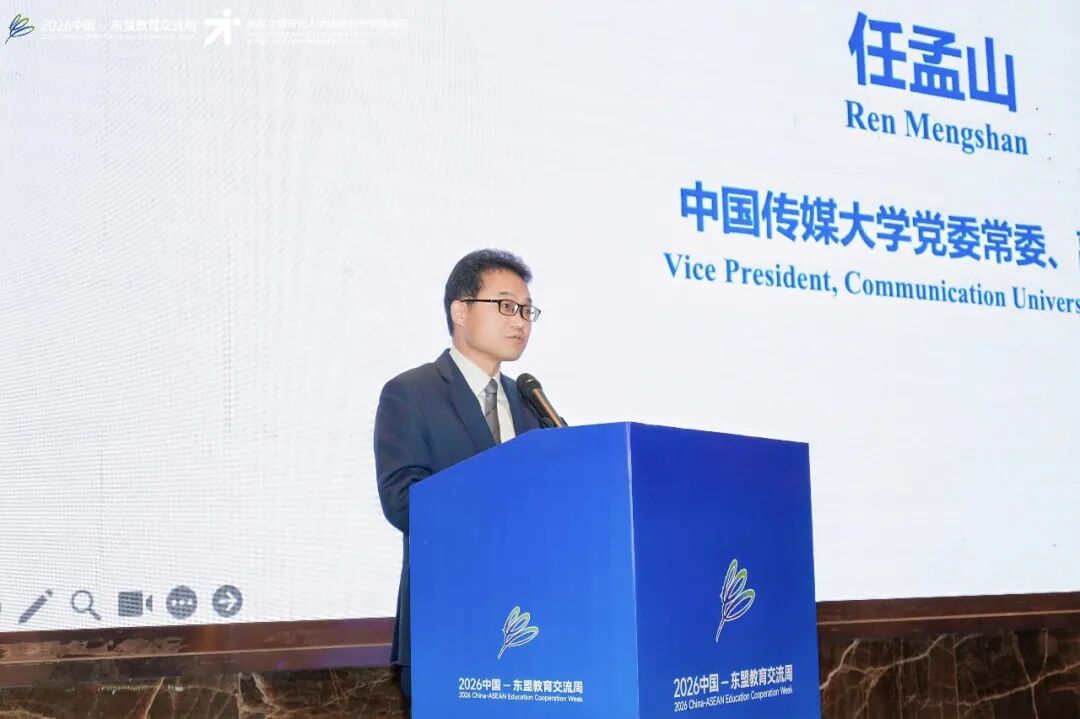
▲Ren Mingshan, Vice President of Communication University of China
Ren Mengshan noted that digital technology is profoundly reshaping global education and that smart education has become a major area of educational reform and innovation. CUC will proactively work with universities and educational institutions across ASEAN to deepen cooperation in smart education and jointly cultivate international talent, contributing educational expertise to the building of a China-ASEAN community with a shared future and opening a new chapter in China-ASEAN educational cooperation.
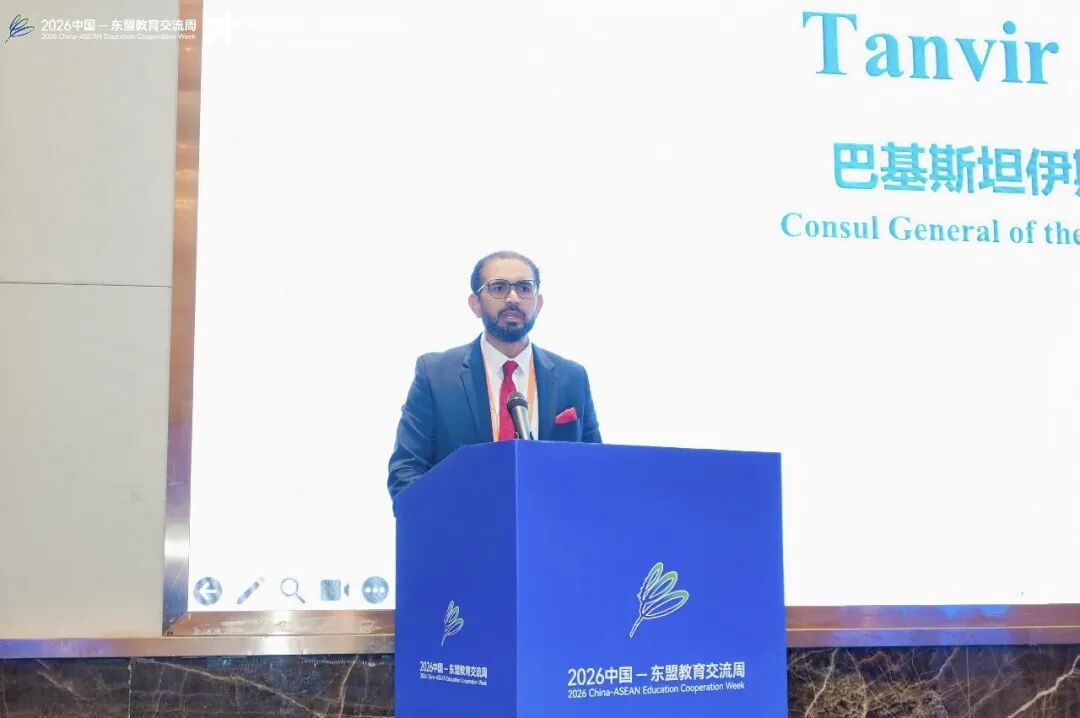
▲Ambassador Tanvir Ahmed Bhatti of the Pakistani Consulate General in Chengdu
Tanvir Ahmad Bhatti said that the conference was of far-reaching significance for promoting regional connectivity, mutual understanding among peoples and common development, while providing an important channel for deepening educational cooperation among Pakistan, China and ASEAN countries.
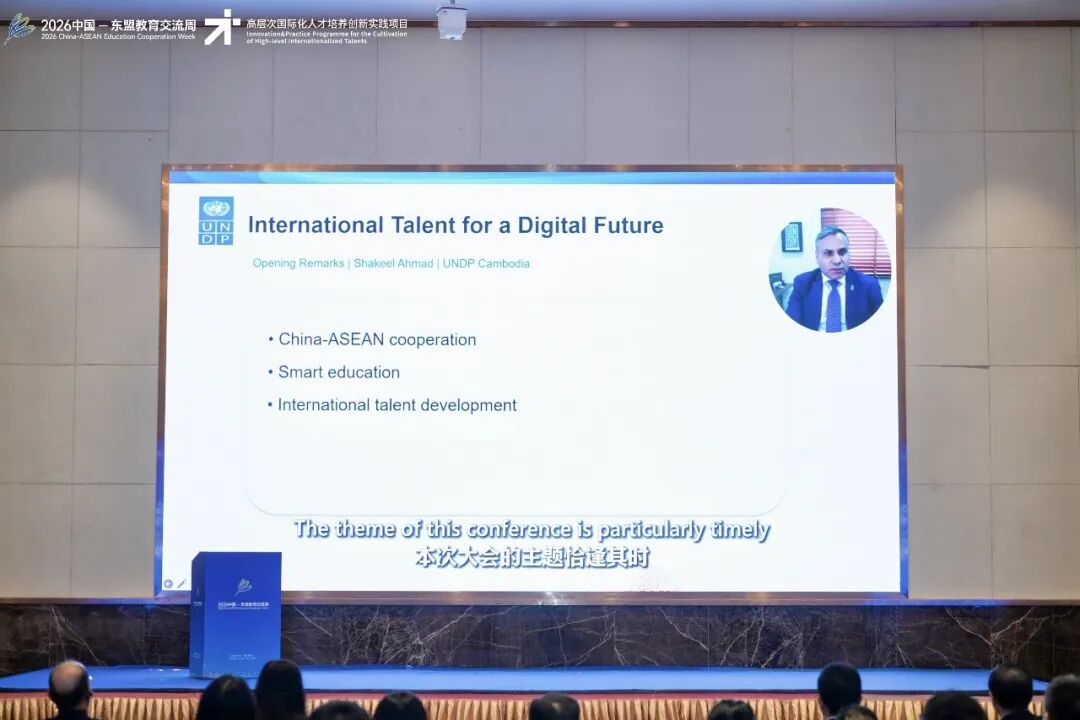
▲Deputy Director of the United Nations Development Programme's Cambodia Country Office Shakir Ahmed delivered a speech online
Shakeel Ahmad delivered his remarks online, noting that international organisations serve as important bridges for cross-border educational cooperation. UNDP will continue to promote the integration of the Sustainable Development Goals with university talent development, support the digital transformation of education in the region, and help enhance the capabilities of young people in various countries.
Keynote Presentations: Insights into Future Trends in Education
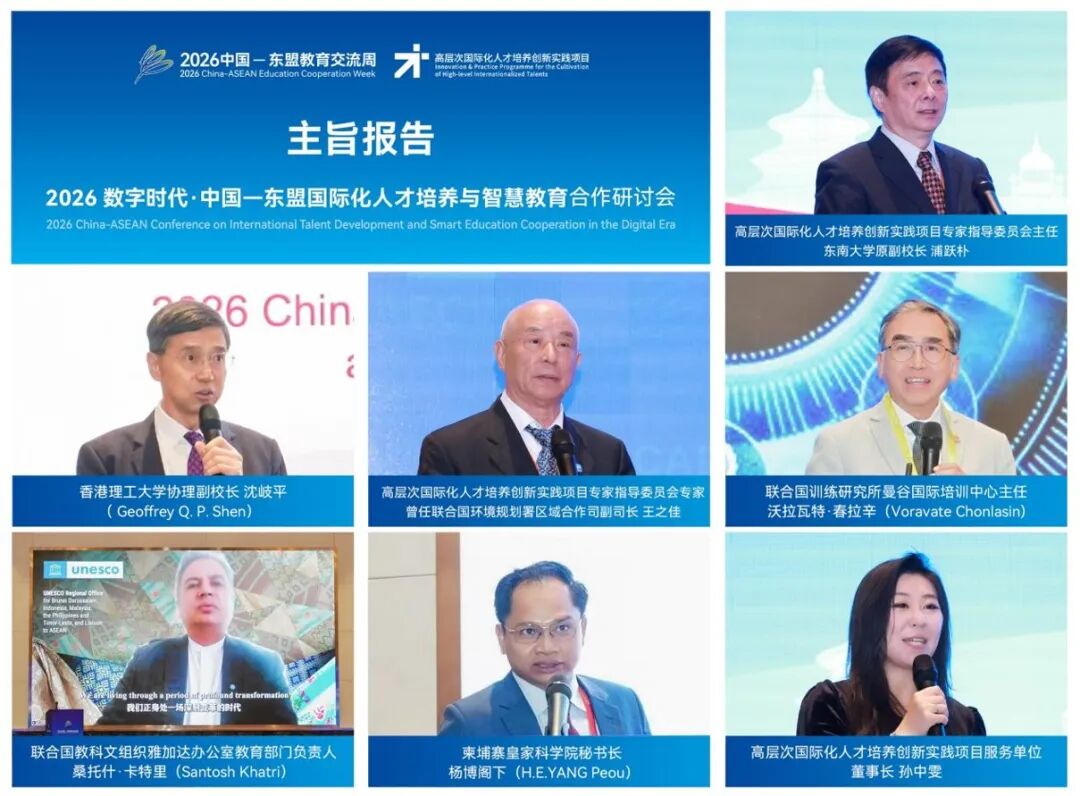
During the keynote session, seven speakers addressed the theme of "Trends in International Talent Development and Smart Education in the Digital Era." Drawing on global perspectives and university practice, they shared insights into pathways for digital transformation in education, the development of smart education ecosystems, the cultivation of core competencies among international talent, regional sharing of educational resources, and the development of talent for international organisations.
Roundtable Dialogues: Building Consensus Around Three Key Issues
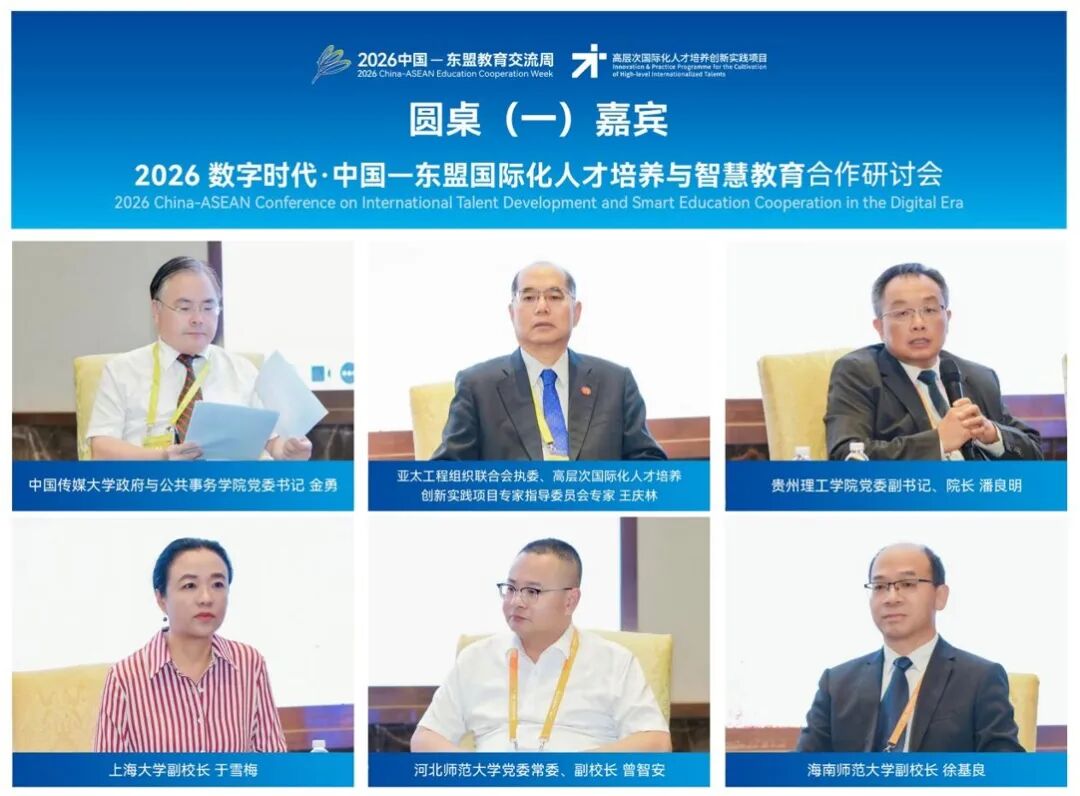
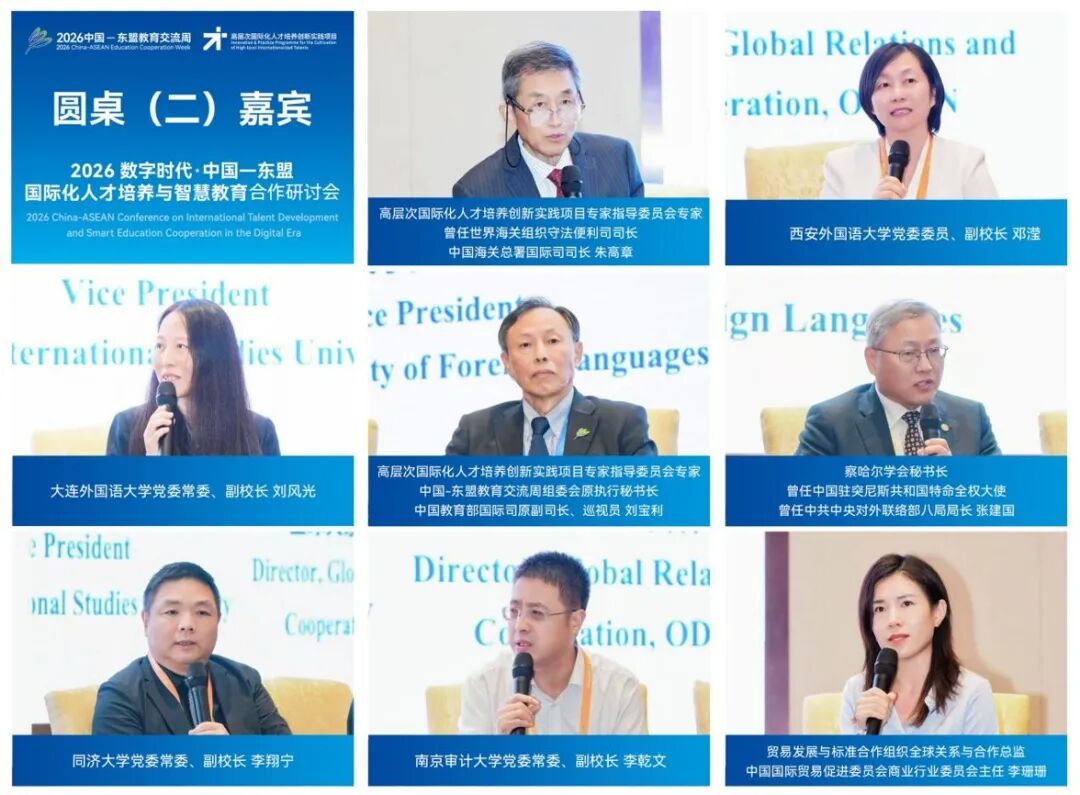
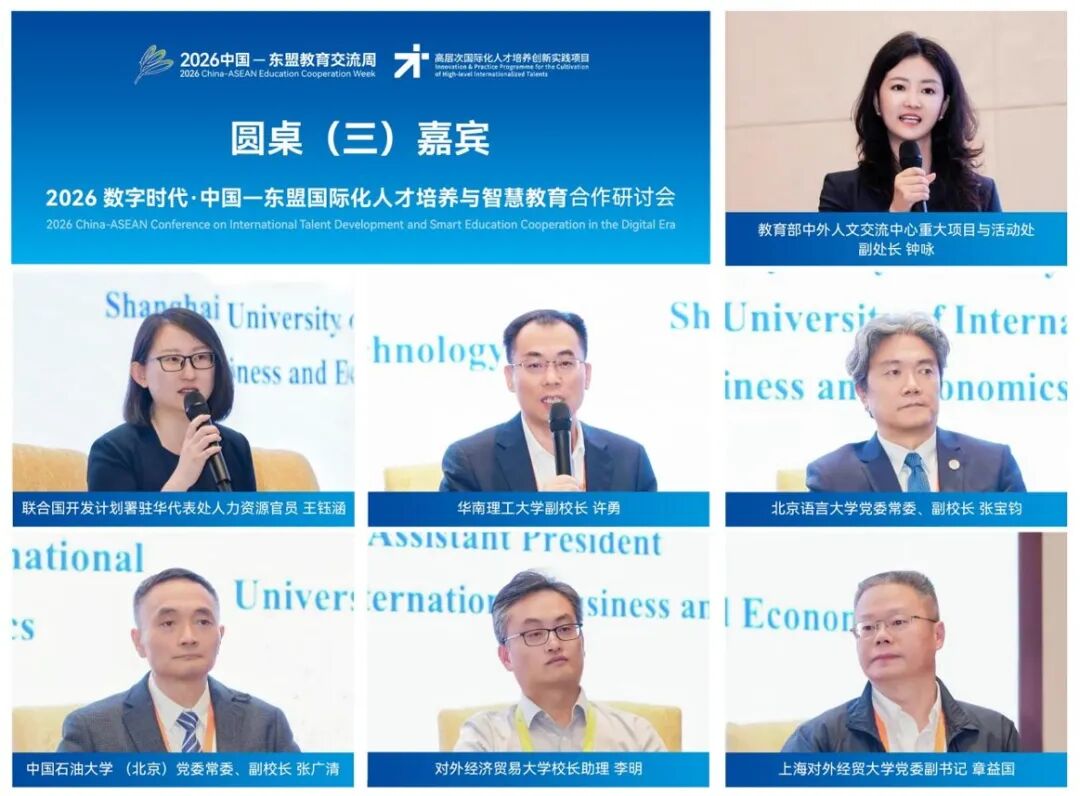
▲Three roundtable discussion sessions
Three themed roundtable discussions were held. Jin Yong, Chair of CUC's School of Government and Public Affairs; Zhu Gaozhang, an expert adviser to the Expert Steering Committee of the Innovation and Practice Programme for the Development of High-Level International Talent and former Director of the Compliance and Facilitation Directorate of the World Customs Organization; and Zhong Yong, Deputy Director of the Department of Major Projects and Activities at the Center for International People-to-People Exchange of the Ministry of Education, moderated the three sessions respectively.
Together with 18 participating guests, they held in-depth discussions on three themes: "China-Foreign Cooperation in Smart Education and Joint Development of Digital Resources"; "Deepening Supply-Demand Alignment to Promote High-Quality Development of International Education"; and "Cultivating a Foundation of People-to-People Exchange to Empower Youth Development."
Participants noted that cooperation in smart education can support high-quality university development and create new pathways for international people-to-people exchange; that the development of high-level international talent is crucial and precise alignment between supply and demand is key; and that humanistic literacy is a core competency of international talent, with people-to-people exchange providing a solid foundation for young people's development. Participants agreed to deepen cooperation through platforms such as China-ASEAN Education Week, jointly build an open and inclusive educational ecosystem, and cultivate international talent equipped for the future.
Sharing Outcomes: Charting Future Directions
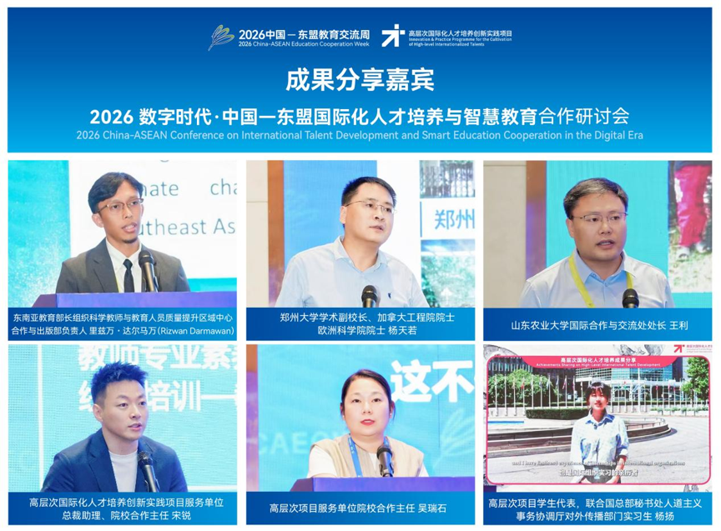
During the outcomes-sharing session, participants exchanged views on talent-development programmes, regional cooperation mechanisms, institutional capacity building and student development pathways. Speakers noted that the Innovation and Practice Programme for the Development of High-Level International Talent, with its cutting-edge curriculum aligned with industry needs and training platforms linking China and overseas institutions, can effectively support universities' internationalisation, broaden the global perspectives of faculty and students, and enhance their overall professional competencies. China, ASEAN countries and relevant international organisations can further strengthen cooperation in international talent development and digital education to jointly create an open and inclusive educational ecosystem.
In his concluding remarks, Yu Changxue said that the conference had brought together diverse stakeholders, established a platform for high-level dialogue, built consensus around talent development in response to the needs of the times, and promoted the implementation of practical cooperation projects, while showcasing achievements from a range of initiatives.
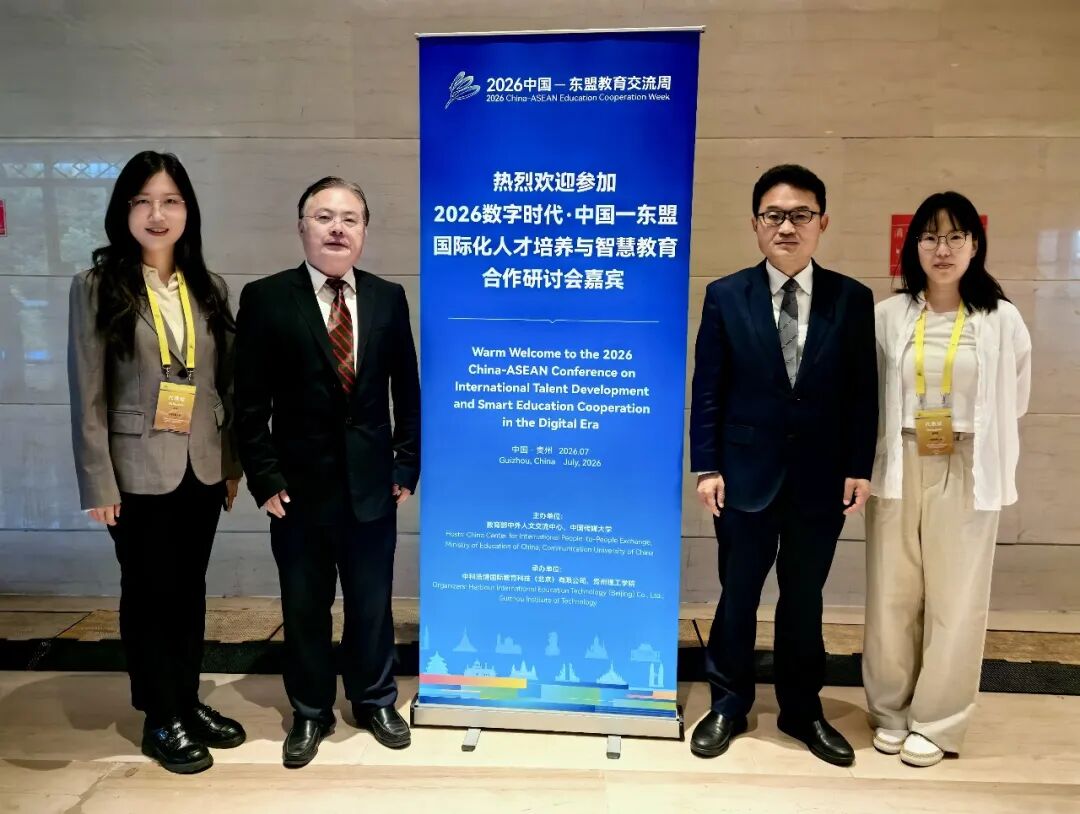
▲ CUC conference attendees group photo conference attendees take a group photo
China and ASEAN are connected by geography and share close cultural ties and a long history of friendly exchanges. The successful organisation of the conference will help strengthen people-to-people exchanges in education, science and technology, and talent development; jointly cultivate high-level international talent; and deepen cooperation in smart education, contributing to the building of a closer China-ASEAN community with a shared future.
This article was translated with AI assistance.
Editor: Fang Yiran