


The 2026 Mazu Culture Women’s Exchange Forum and the 14th Forum of the UNESCO Chair in Media and Gender was recently held in Putian, Fujian Province, China, bringing together more than 100 experts, scholars and guests from 13 countries.
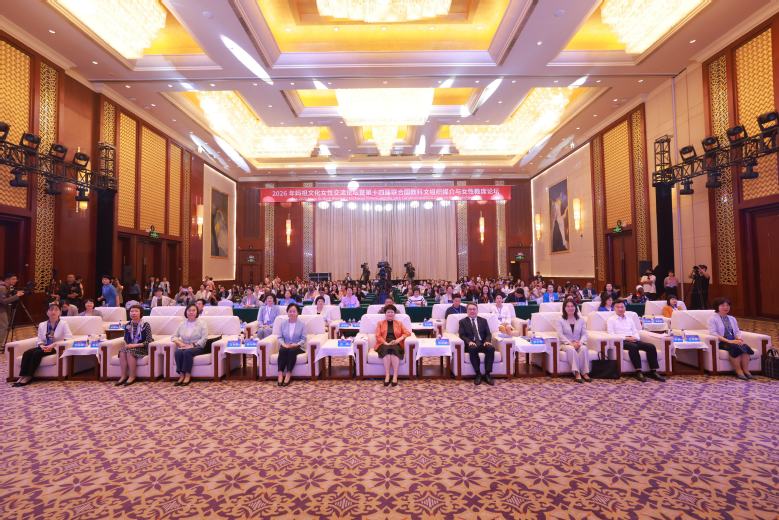
The UNESCO Chair in Media and Gender is jointly supported by Communication University of China and China Women’s University. As a major sub-forum of the 11th World Mazu Culture Forum, this year’s event was held under the theme “Promoting Mazu’s Culture, Advancing Women’s Growth”. Feng Ling, Vice-President and Member of the Secretariat of the All-China Women’s Federation; Shahbaz Khan, Director of UNESCO’s Regional Office for East Asia; Zhang Shuting, President of Communication University of China; Yang Caixia, President of China Women’s University; Wen Xuelin, Deputy Secretary of the CPC Putian Municipal Committee, were among the officials who attended and addressed the forum’s opening ceremony. Scholars and experts engaged in discussions centered on cultural heritage, digital empowerment, and mutual learning among civilizations.
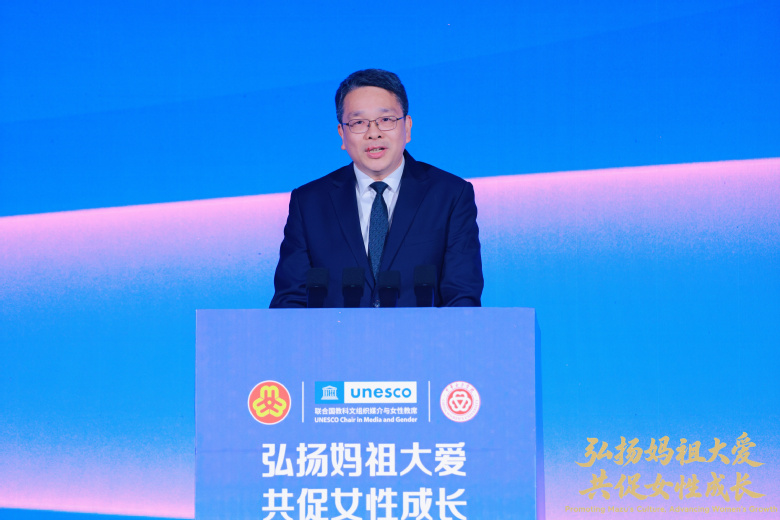
In his address, President Zhang Shuting emphasized the importance of harnessing communication to tell women’s stories effectively and utilizing media to convey the meaning of Mazu culture, helping to secure wider recognition of women’s contributions and bring their experiences into public discourse. Zhang highlighted the need to bridge the digital divide through technology, making it more inclusive and human-centric; women, he noted, not merely experiencing technology, but also learn to use, apply and create it. He also stressed the role of education in nurturing female talents and strengthening the foundations for women’s advancement. Zhang reaffirmed Communication University of China’s commitment to supporting the high-quality development of the UNESCO Chair in Media and Gender, expanding the space for women’s expression through communication, enhancing their capacity for development through technology, and solidifying the foundation of their development through education. He also called for efforts to make Mazu culture an important window through which the world can better understand the cause of women in China.
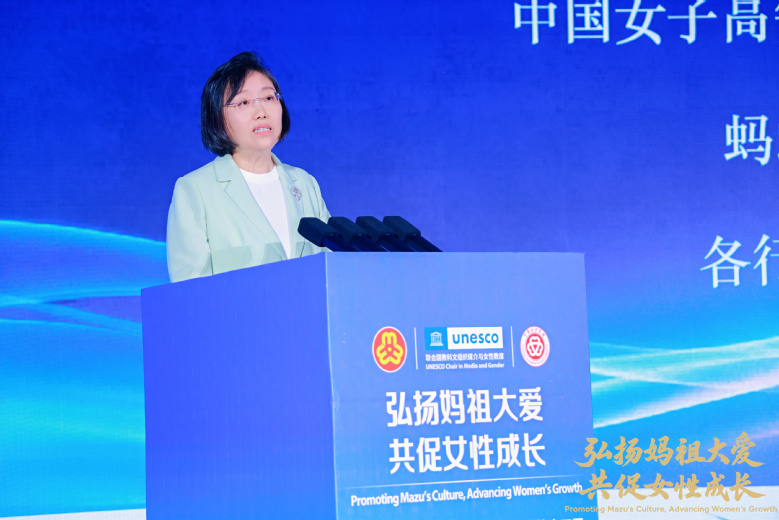
Professor Liu Liqun, Chair-holder of the UNESCO Chair in Media and Gender, noted that Mazu has united communities and inspired shared values for over a millennium, while the Chair connects China with the wider world and amplifies women’s voices. Over the 21 years since its establishment, the Chair has convened 14 international forums, published more than 50 books and over 100 academic papers, undertaken more than 50 research projects including major projects funded by China’s National Social Science Fund and projects under UNESCO’s International Programme for the Development of Communication, and trained more than 150 master’s and doctoral students. Reflecting on Mazu’s universal love in relation to the Chair’s mission, Liu highlighted their shared founding aspirations, aligned missions, and common values. Looking ahead, the Chair will continue to draw on insights from women’s studies to illuminate pathways for women’s development.
Participating experts exchanged views on the transmission of cultural heritage, digital empowerment and mutual learning among civilizations. The forum announced the outstanding and shortlisted cases for Global Women’s Digital Empowerment. The call for cases received a total of 324 submissions from China and abroad. Following successive rounds of evaluation, 50 outstanding cases and 100 shortlisted cases were selected, showcasing the wisdom and commitment of women around the world in the digital age.
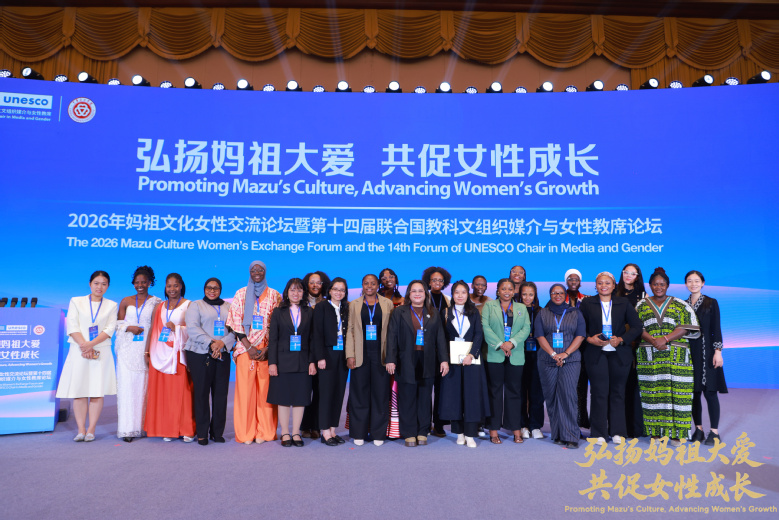
The UNESCO Chair in Media and Gender was established at Communication University of China in September 2005, with a joint Chair established at China Women’s University in October 2018. The Chair has consistently worked to advance women’s development and gender equality through media and communication, while promoting mutual learning among civilizations. The successful hosting of this forum has injected new vitality into deepening people-to-people exchanges between China and other countries, and into jointly advancing the global cause of women.