






By Ou Chuyao
In order to deepen the integration and innovation of digital technology and rural revitalization, and strengthen the collaborative education of labor education and professional practice, from January 19th to 22nd, the Innovation and Entrepreneurship Education Center, the School of Government and Public Affairs, and the School of Data Science and Intelligent Media of Communication University of China jointly held the second "Keyouqian Banner Rural Revitalization Labor Innovation Practice Competition and Labor Education Research Activity" in Inner Mongolia. The teacher-student research team went deep into the rural grassroots, measuring the fertile land of northern Xinjiang with their footsteps, activating the revitalization momentum with digital creativity, serving local development needs through in-depth field investigations, real labor experiences, and professional innovative designs, and achieving the dual goals of "creativity to the countryside" and "labor education".
On January 19th, the first day of the study tour for the research team officially began. Teachers and students explored the practical path of rural revitalization through labor experience and discussions, with the theme of "digital innovation experiments in the fields", going deep into cooperatives, Gacha villages, and pastures. The first stop was the 'Chuanqi Forest’, which symbolized the deep friendship between Zhongchuan and Keyouqianqi. Maple and elm trees depended on each other to form a forest, planted by alumni who participated in labor practice in previous years, symbolizing "maple and elm on the same boat". Classmates here revisited the original intention of cooperation, appreciated the continuous emotional bond between the two places, and injected warm emotional power into the upcoming study tour.
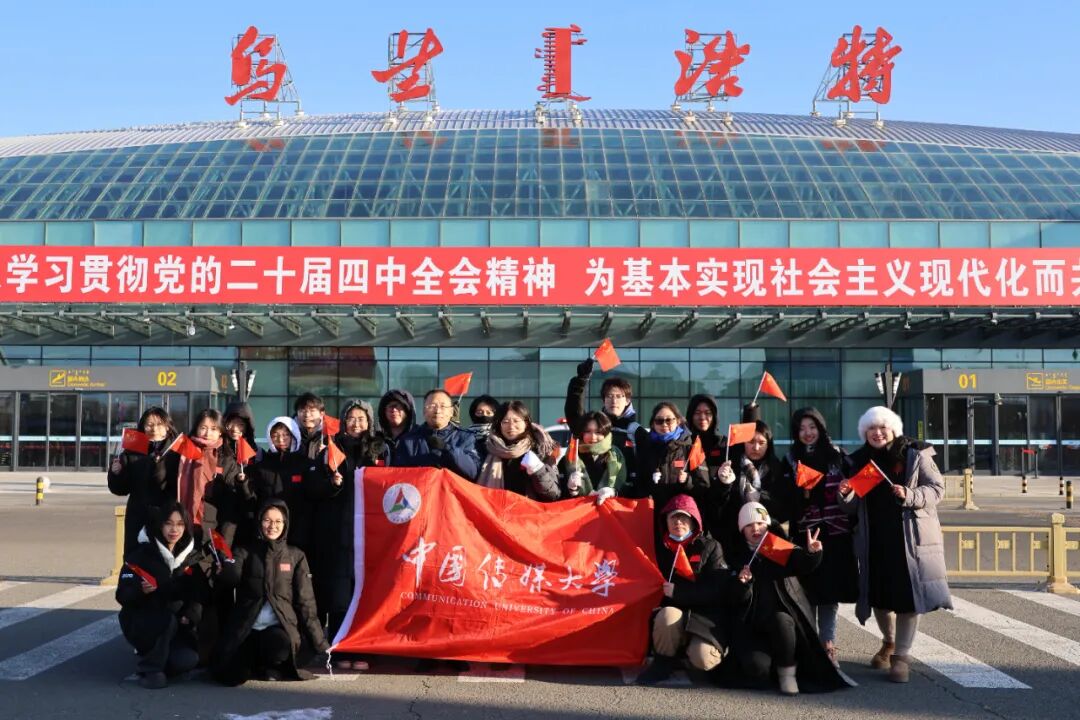
Group Photo of the CUC Study Tour Team
Through the discussion, students learned about the touching story of national model worker Guo Lili returning home to start a business and leading her fellow villagers to develop industries. This woman who came out of the countryside, with her resilience and wisdom, has turned small corn into a big industry that drives the prosperity of the local people. Classmates engaged in lively discussions around the construction of "digital governance of the corn industry", attempting to visualize the entire chain of planting, processing, and sales, and explore how digital technology can empower traditional agriculture. In the processing workshop and warehouse, students also personally participated in corn picking, experiencing the "harvest at their fingertips", and deeply understanding the revitalization model of green circular planting and "employment at home" through labor. The golden corn kernels not only carried the joy of harvest, but also reflected the hope of rural revitalization.
At the Arilin Yihegacha Party and Mass Service Center, a round table discussion with villagers, village officials, and returning university students was held in depth. Students discussed the optimization of grassroots information communication, affairs handling, and governance based on the "Gacha Digital Village Affairs" mini program and the "Digital Points System" plan designed in the early stage. The simple language of the villagers, the pragmatic style of the village cadres, and the nostalgia of returning college students rooted in their homeland have made students deeply feel the warmth and challenges of grassroots governance. Everyone was trying to extract replicable experiences that use digital tools to enhance rural governance efficiency, so that technology can truly serve the daily lives of the people.
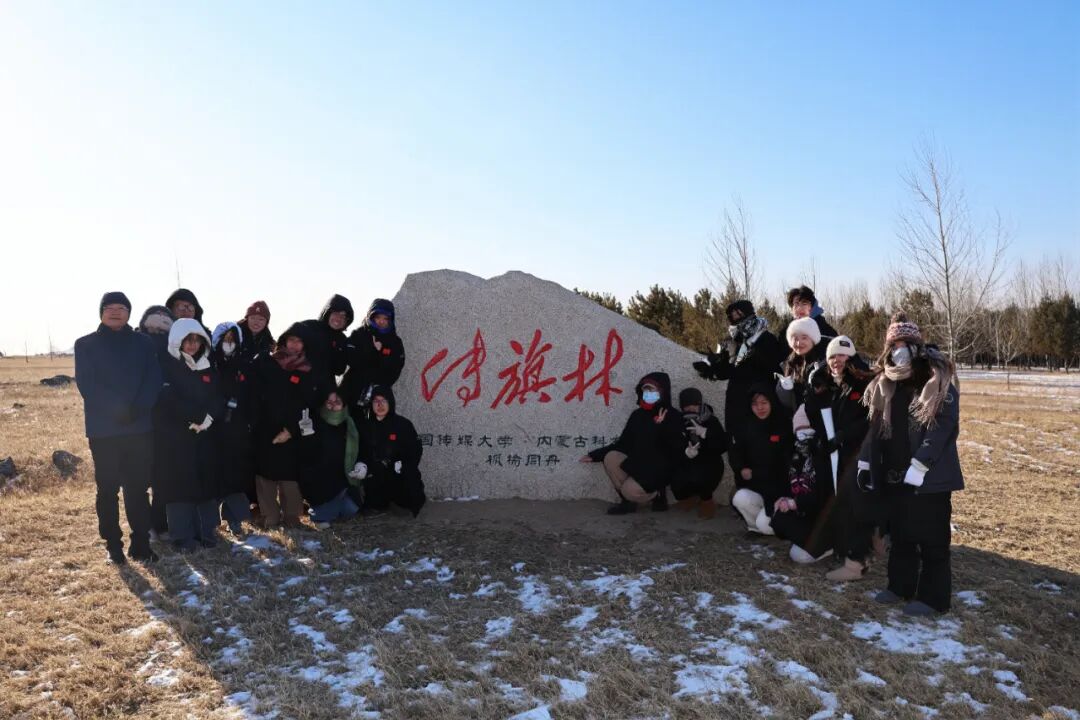
Group Photo of the CUC Study Tour Team
On January 20th, the study tour group visited Hongfeng Village in Juli Town. The town officials provided a detailed introduction to the innovative point system in Hongfeng Village for the students. Through a combination of online and offline point management systems, the point data can be monitored and traced. Villagers participated in public labor such as snow sweeping and environmental cleaning, and the accumulated points can be exchanged for agricultural supplies. This positive incentive mechanism effectively guided villagers to actively participate in rural public affairs, making "village affairs" become "everyone’s affairs".
The team also visited Xing’an Beijing Community, Xingke Community, and Zhasaktu Community. At the Xing’an Beijing Community Smart Elderly Care Dispatch Center, students systematically learned about the operation mode of the "one click alarm system" and digital health records, and personally experienced how the community smart management system provides timely and convenient services for the elderly. The "Five Blessings" practice of Xingke Community has woven a happy network of people of all ethnic groups living, learning, working, and enjoying together, allowing the seeds of ethnic unity to take root and sprout at the grassroots level. At the "Gongfu Workshop" in the Zhasaktu community, students made twisted sunflower and bead dolls under the guidance of residents, experiencing the flexible employment model of "increasing income at home". Colorful twisted sticks wrapped the hope of life around the fingertips; Crystal beads connect the dreams of community residents to achieve common prosperity.
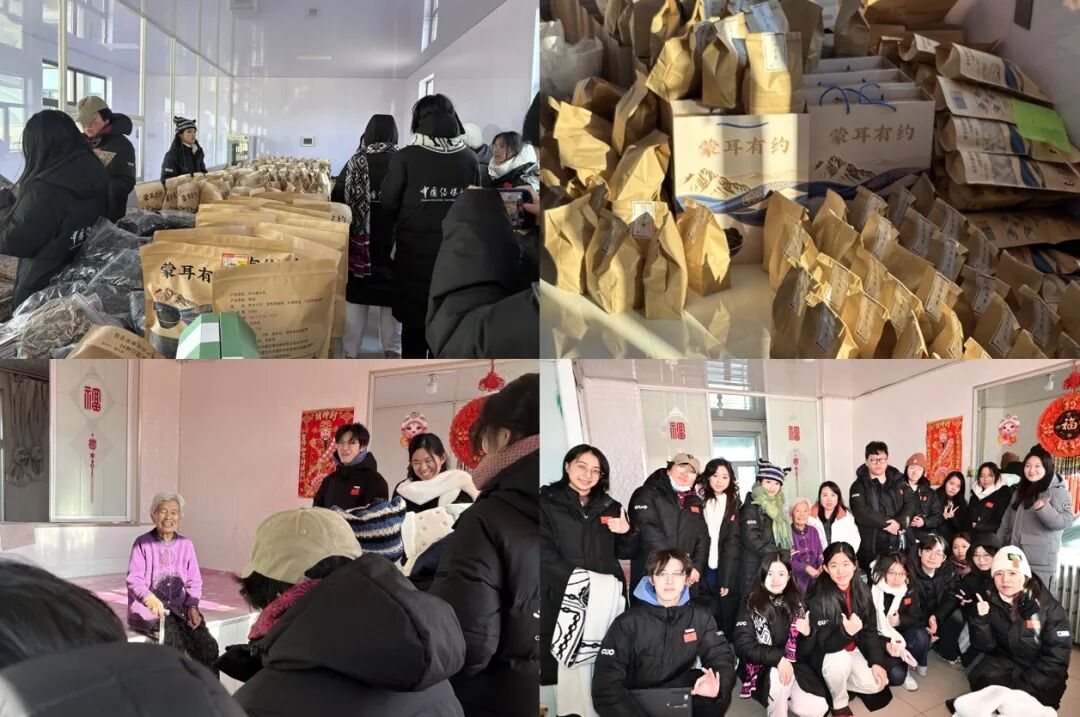
Scenes from the Study Tour Activities
On January 21st, the team visited the League-level intangible cultural heritage grass-weaving base in Xing’an Village, Russian Sports Town. Corn leaves, a common agricultural waste, are skillfully transformed into exquisite handicrafts such as grass woven goldfish and coasters. The innovative model of "cooperative + training school" has cultivated multiple inheritors of intangible cultural heritage and handicraft practitioners, enabling traditional skills to be revitalized in the new era. Under the guidance of intangible cultural heritage inheritors, students experienced the production of grass weaving on site and felt the ingenuity and wisdom flowing through their fingertips. Corn leaves, woven one by one, are not only handicrafts, but also the inheritance of culture and the hope of the countryside.
On January 22nd, the study tour came to an end. The team went to the Government Service and Data Management Bureau to witness the temperature, convenient processes, and efficient services provided by digital people in the government hall, and conducted in-depth discussions on the optimization plan of "flag level government digitalization". At Xing’an Beijing Science and Technology Park, students connected and exchanged ideas with digital cultural, tourism, and agricultural enterprises as well as e-commerce platforms, integrating their four-day experiences, thoughts, and feelings into the creative loop of "cultivating and studying in northern Xinjiang".
During the four-day trip, the research group integrated digital innovation concepts such as "Digital Village Affairs Mini Program", "Industrial Data Dashboard", and "Intangible Cultural Heritage Live Streaming" into their research practice, and attempted to respond to local needs with professional wisdom in the fields and countryside. These first-hand materials harvested in practice not only laid a solid foundation for the "Northern Xinjiang Labor Innovation Competition", but also enabled subsequent digital rural and smart industry solutions to truly root in the land and serve people’s livelihoods. The students expressed that they will transform their four days of observations, feelings, thoughts, and gains into participation plans for the digital innovation competition, allowing their youthful creativity to take root in the revitalization of the local area and contribute their professional strength to the development of northern Xinjiang through the dissemination of wisdom.
Editor: Fang Yiran
Managing Editor: Shao Jianyu
Editor-in-chief: Yu Ran, Yang Zhongtian