






By Zhang Menghan, Wu Hongyu
Launch of the Report on the Innovative Development of China's Intelligent Media (2024 - 2025)
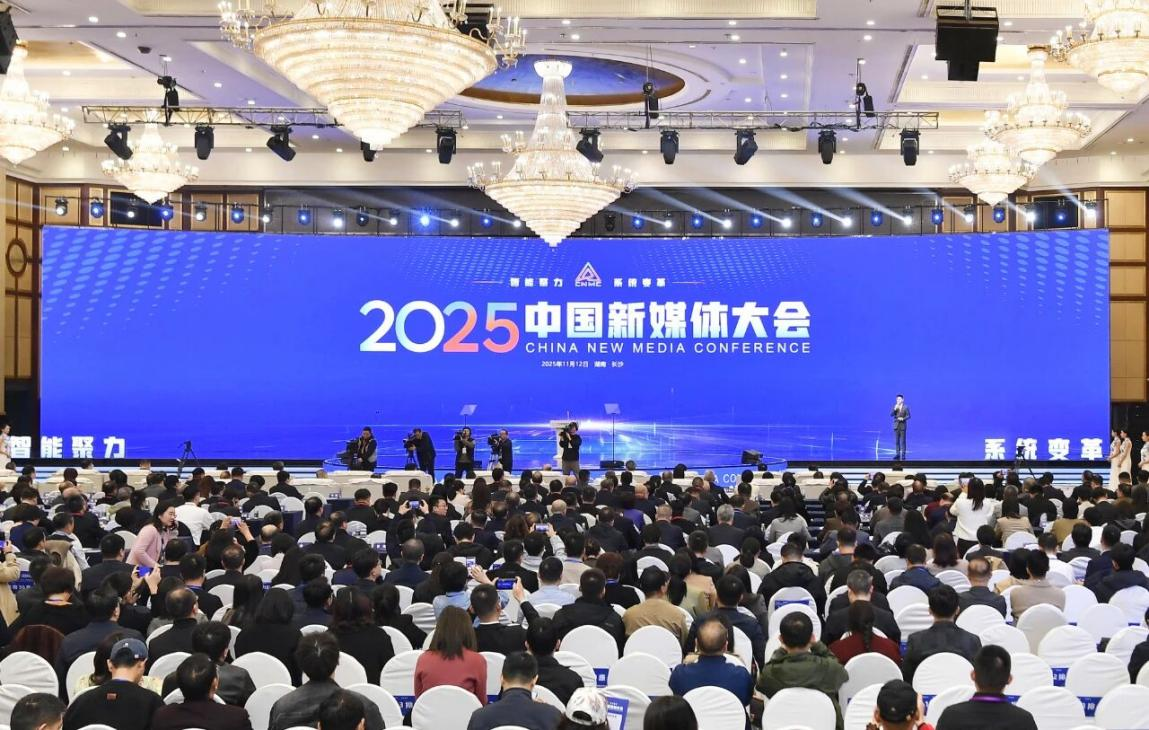
China released its latest national report on intelligent media development during the 2025 China New Media Conference, held from November 11–13 in Changsha, Hunan Province. The conference, themed "Intelligent Synergy, Systemic Transformation," focused on reshaping media production, communication systems, and evaluation frameworks amid accelerated AI-driven change.
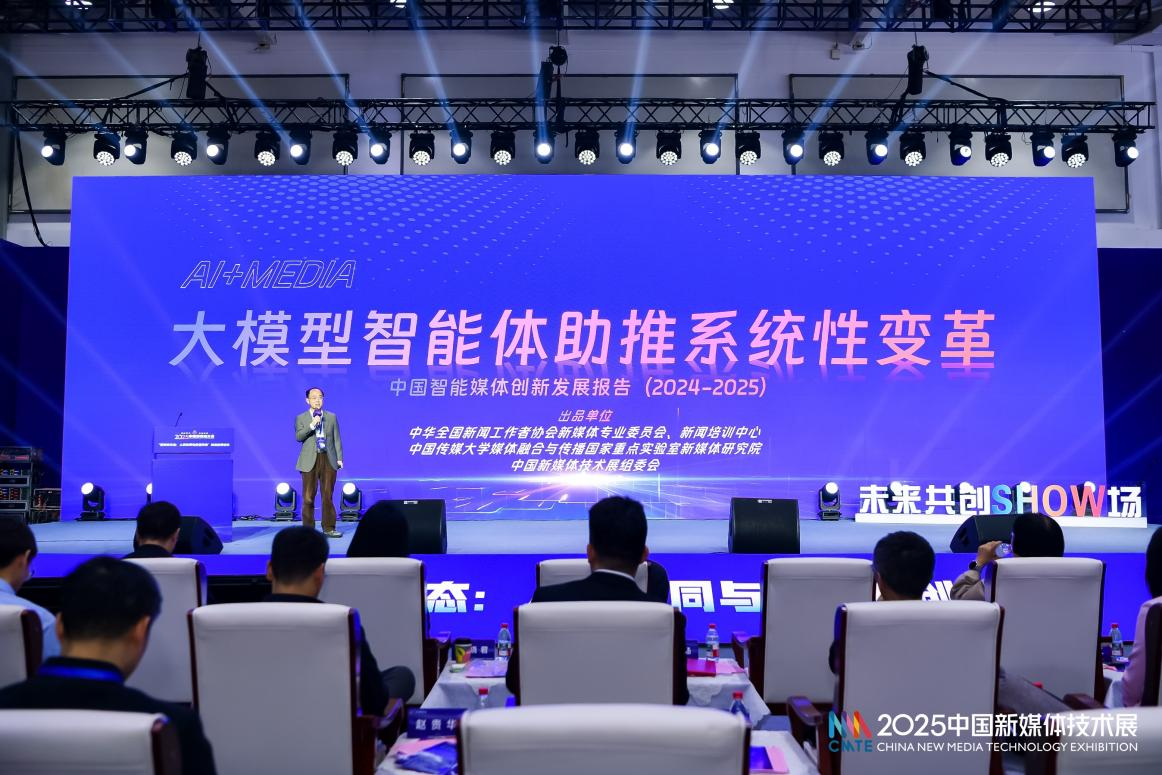
The All-China Journalists Association's New Media Committee, the News Training Center, the National Key Laboratory of Media Convergence and Communication at the Communication University of China (CUC), and the China New Media Technology Expo Organizing Committee jointly issued the "AI Agents Driving Systemic Transformation: China Intelligent Media Innovation Development Report (2024–2025)".
Participants at the opening ceremony of the 2025 China New Media Conference in Changsha, Hunan province in Central China, Nov 11, 2025.
AI Agents Become Core Engine of Media System Reconstruction
According to the report, China's intelligent media sector has entered a pivotal stage in which development is shifting from tool-centric accumulating to system restructuring. AI agents built on large models are emerging as the central engine of industry-wide transformation, enabling a paradigm shift from human–machine collaboration to human–machine symbiosis.
With expanding planning, reasoning, and autonomous action capabilities, AI agents are evolving from auxiliary tools to core decision-making mechanisms within newsrooms and media institutions. This shift is accelerating the transition from "process optimization" toward complete ecosystem reconstruction.
Participants attending presentations on large-model intelligent media at the 2025 China New Media Technology Exhibition in Changsha, Hunan province in Central China, Nov 11, 2025.
Four Analytical Dimensions of the 2024–2025 Report
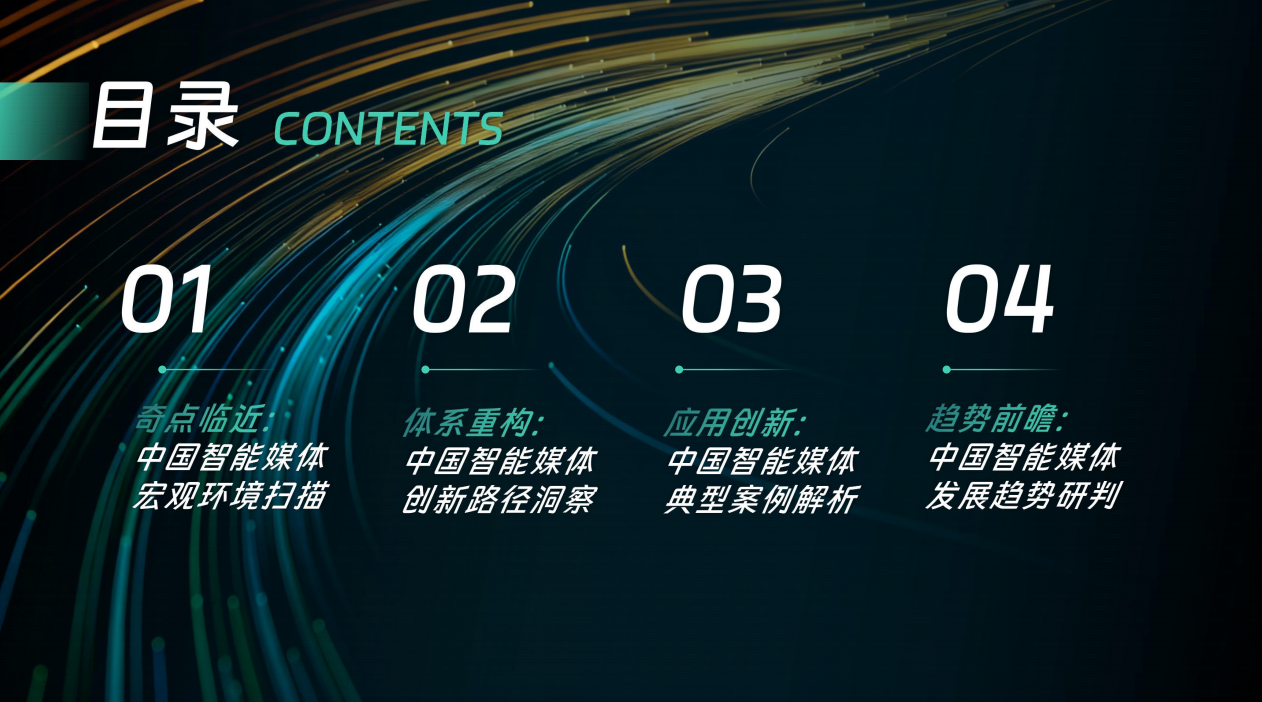
The report outlines major trends shaping China's intelligent media development across four dimensions:
Macro Landscape: The interaction between intelligent media and China's policy, technological, market, and sociocultural environment.
Industrial Shifts: Evolution of digital infrastructure, emerging AI agent ecosystems, and "AI+" sectoral intelligence models.
Case Studies: A survey of leading intelligent transformation examples across mainstream media, tech companies, and platforms.
Future Directions: Analysis of strategic drivers, infrastructure upgrades, human–machine workflow changes, AI agent applications, business models, and credibility-building in the intelligent media era.
The report draws on field research, expert interviews, and documentation to examine 18 representative cases, including People's Daily, Xinhua News Agency, China Media Group, Hunan Broadcasting System, Tencent, ByteDance, Alibaba, Kuaishou, Migu Video, SenseTime, and several AI-focused startups.
"Large-Model Intelligent Agents Driving Systemic Transformation: Report on China's Intelligent Media Innovation and Development (2024–2025)"
From Technical Empowerment to Value Reconstruction
The authors argue that China's media sector is undergoing a structural transition from technology-driven empowerment to value-oriented reconstruction. Rather than relying on single technological advantages, the future competitiveness of media organizations will depend on the coordinated development of technology, institutional design, and talent development.
The report warns that during rapid technological acceleration, the media industry must reinforce principles of trustworthiness, accountability, and human-centered design, ensuring AI-enabled systems remain credible and controllable.
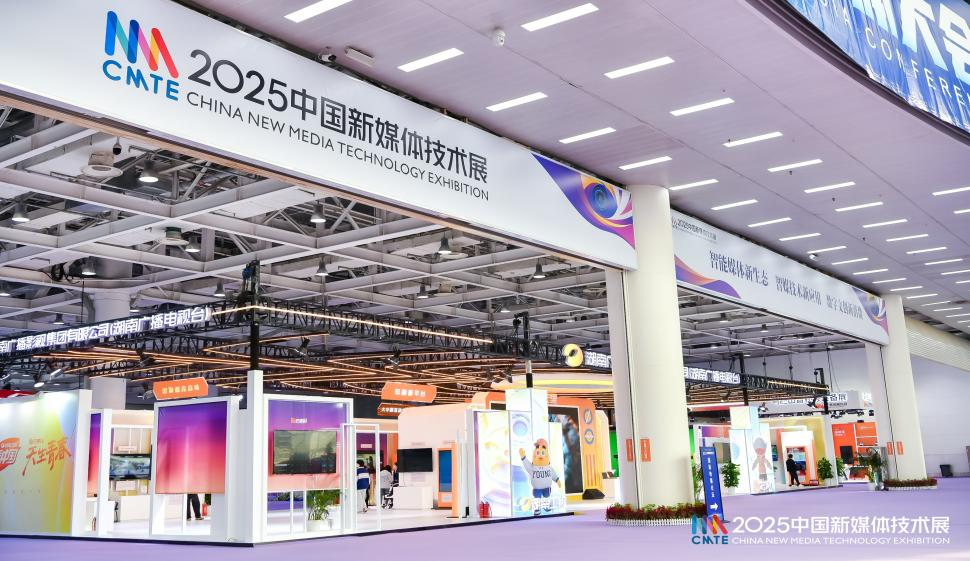
Visitors touring exhibition booths at the 2025 China New Media Technology Exhibition in Changsha, Hunan province in Central China, Nov 11, 2025.
Intelligent Media as a New Engine of Communication
Since 2019, CUC's National Key Laboratory of Media Convergence and Communication has published annual studies on China's intelligent media landscape. This year's edition was led by Professor Zhao Zizhong, with Dr. Xu Qi serving as project leader.
The institute continues to conduct research in fields such as intelligent communication, media–AI integration, next-generation mobile media, big data, international communication, digital humanities, and new-media talent cultivation.
Editor: Fang Yiran
Managing Editor: Shao Jianyu
Editor-in-chief: Yu Ran, Yang Zhongtian