


Recently, the 3rd Seminar on Accessible Information Communication and the Protection of Cultural Rights, along with a special screening of the "Guangming Cinema" accessible film project, was held at the UNESCO headquarters in Paris, France. The event was co-hosted by the Communication University of China (CUC), the UNESCO Information for All Programme (IFAP), and the China Human Rights Development Foundation.
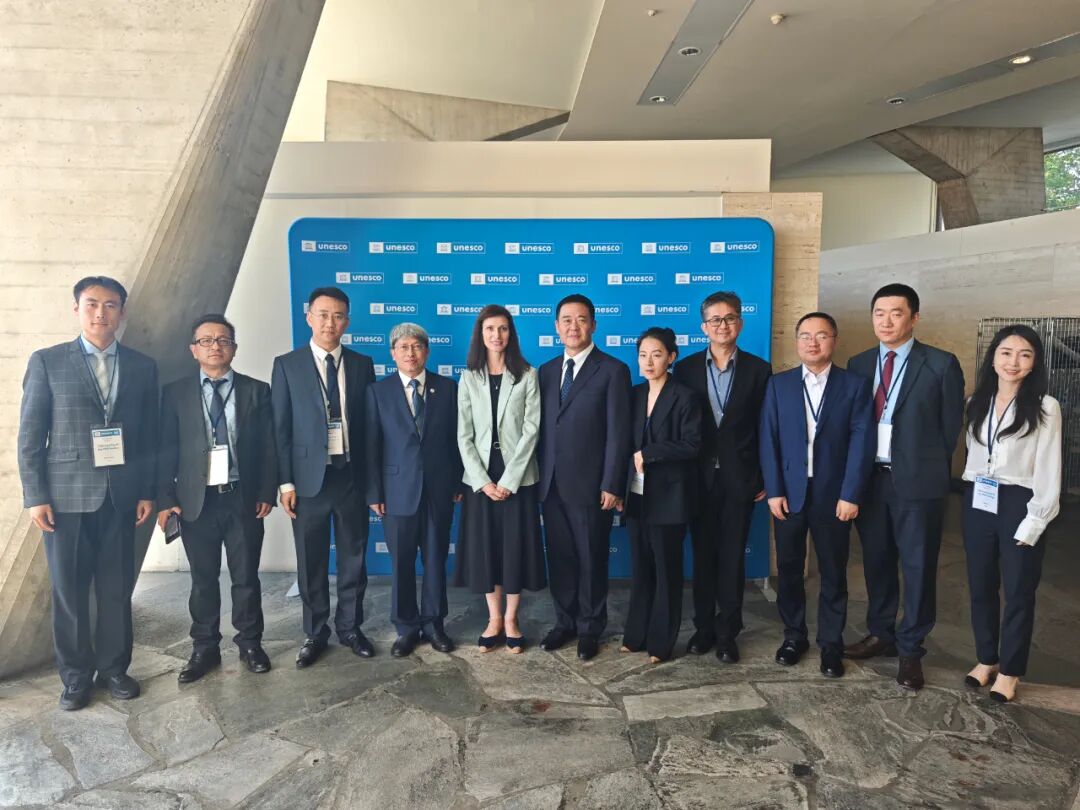
During the conference, the Communication University of China (CUC) and the UNESCO Information for All Programme (IFAP) officially launched a three-year cooperation mechanism for 2026–2029, aiming to jointly promote the development of global information accessibility in the digital era.
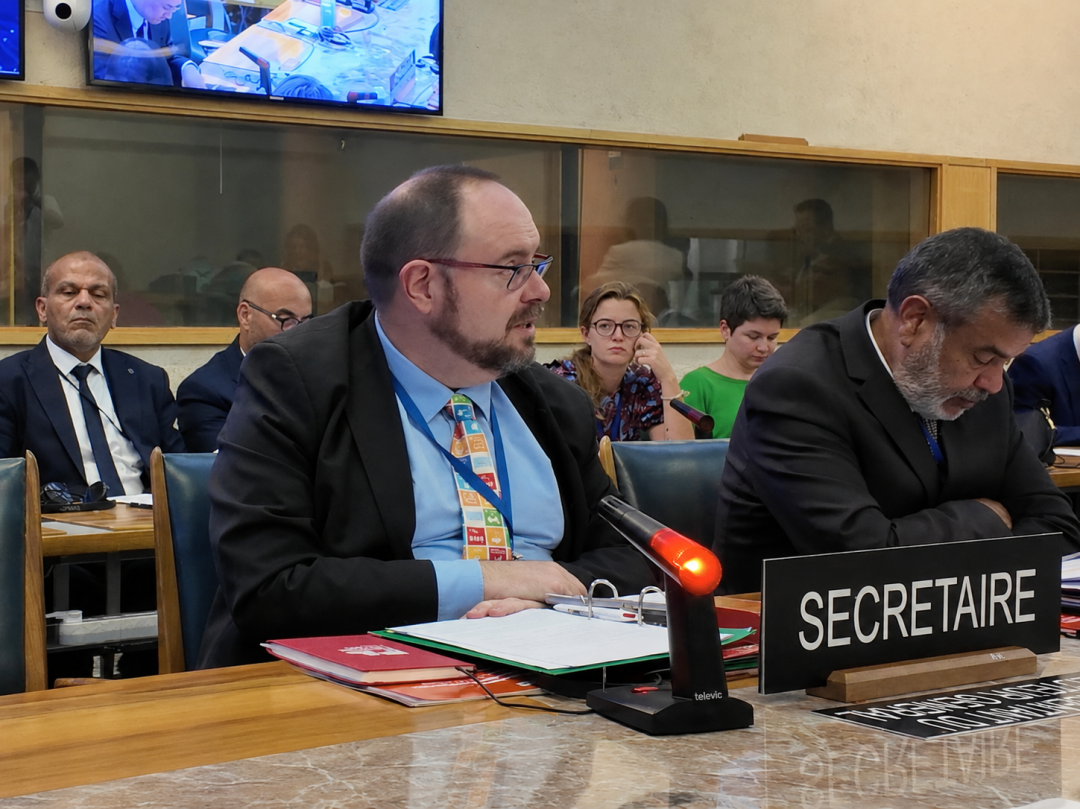
The year 2026 marks the 20th anniversary of the adoption of the Convention on the Rights of Persons with Disabilities, as well as the 25th anniversary of the establishment of UNESCO's Information for All Programme (IFAP). Guilherme Canela, Director of the Division for Digital Inclusion, Policies and Digital Transformation at UNESCO and Secretary of the Information for All Programme, stated in his address that the collaboration between UNESCO and Communication University of China to advance information accessibility priorities will contribute to the implementation of the UN 2030 Agenda for Sustainable Development and the global fulfillment of the UN Global Digital Compact.
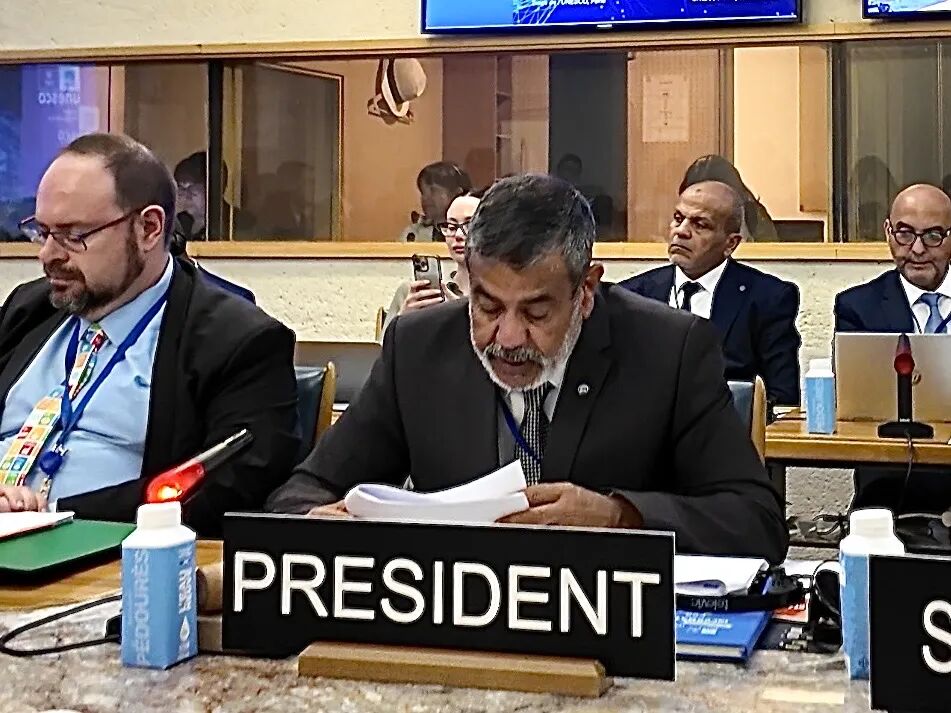
Salih Abdullah, Chair of the UNESCO Information for All Programme (IFAP), stated that the digital divide remains a significant challenge for global inclusive development. Communication University of China (CUC) has achieved the unity of technological innovation and cultural communication. Through its practices in accessible communication, the university empowers persons with disabilities with equal opportunities to access cultural resources, providing valuable Chinese experience for the global advancement of the Information for All Programme.
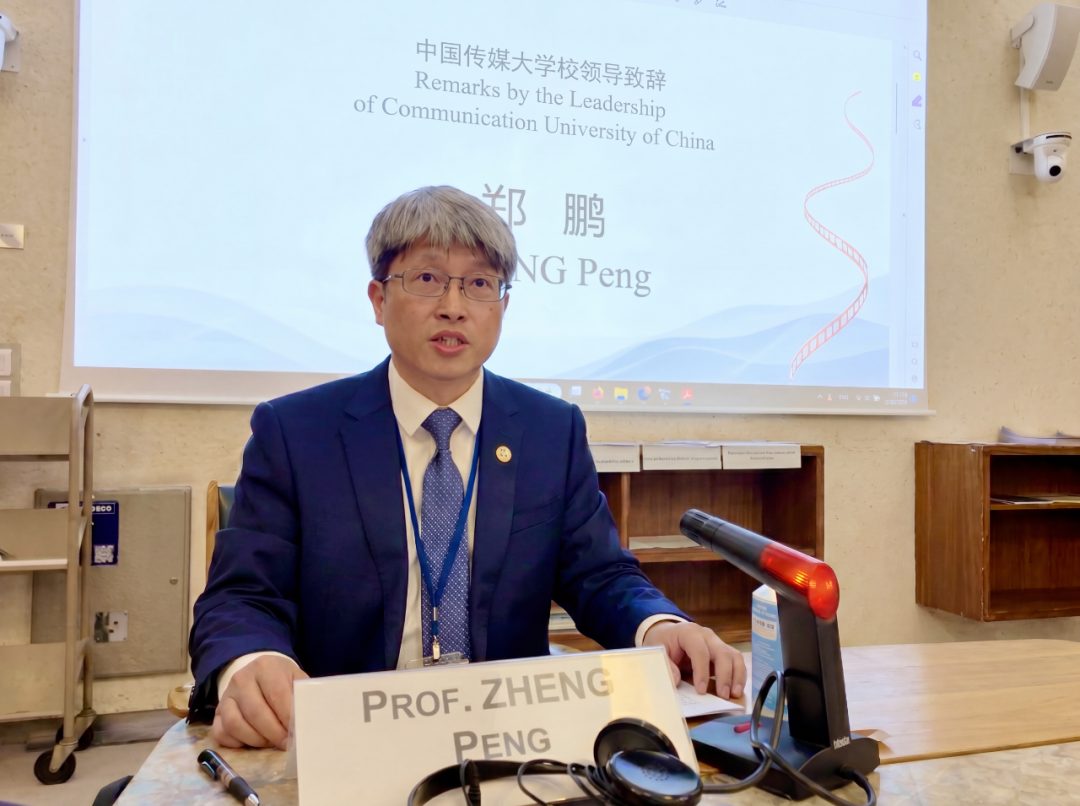
Zheng Peng, Deputy Secretary of the CPC Committee of the Communication University of China (CUC), stated that the outline of China's 15th Five-Year Plan explicitly proposes to "deeply promote the use of technology to assist persons with disabilities, and strengthen the construction of an accessible environment for public facilities, information sharing, and social services." As a national "Double First-Class" university, the Communication University of China (CUC) has conformed to the trend of the times and served the overall national interest. By consistently leveraging its industrial advantages in media and deeply engaging in accessible information dissemination, the university strives to satisfy the growing intellectual and cultural needs of the people with disabilities and promote the maximization of their rights and interests.
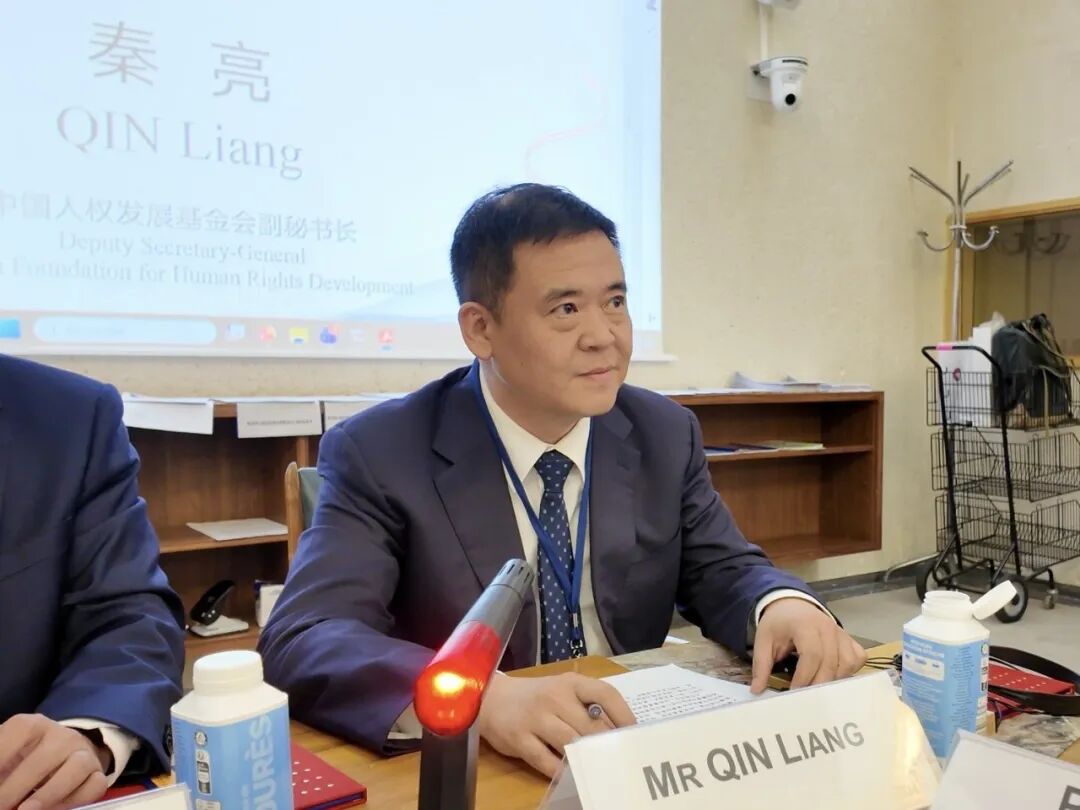
Qin Liang, Deputy Secretary-General of the China Foundation for Human Rights Development, pointed out that China continues to promote making access to basic public services more equal in the cultural sphere. By implementing digital reading promotion projects for the blind and advancing the accessibility transformation of digital platforms, the country ensures that individuals with visual impairments can more conveniently access public information and services. The National Human Rights Action Plan of China (2026–2030), recently released by the Chinese side, explicitly proposes expanding the supply of cultural services and products for persons with disabilities, increasing the availability of accessible radio, film, and television programs, and strengthening the development of information accessibility. It is foreseeable that the cause of accessible information dissemination in China will embrace fresh opportunities for development.
Fu Haizheng, Executive Dean of the Institute for Accessible Communication at the Communication University of China (CUC), delivered a keynote presentation titled "Integrated Communication Facilitating the Protection of Cultural Rights: A Case Study of the 'Guangming Cinema' Accessible Film Dissemination Practice." Fu Haizheng noted that there are currently over 17 million visually impaired people in China. The "Guangming Cinema" project uses accessible films as an entry point, inserting narrations of visual scenes into the gaps between dialogue and sound effects, enabling visually impaired individuals to "understand films through listening." The project adheres to public welfare production and free dissemination, producing 104 accessible films annually to ensure that visually impaired individuals can enjoy two works every week.
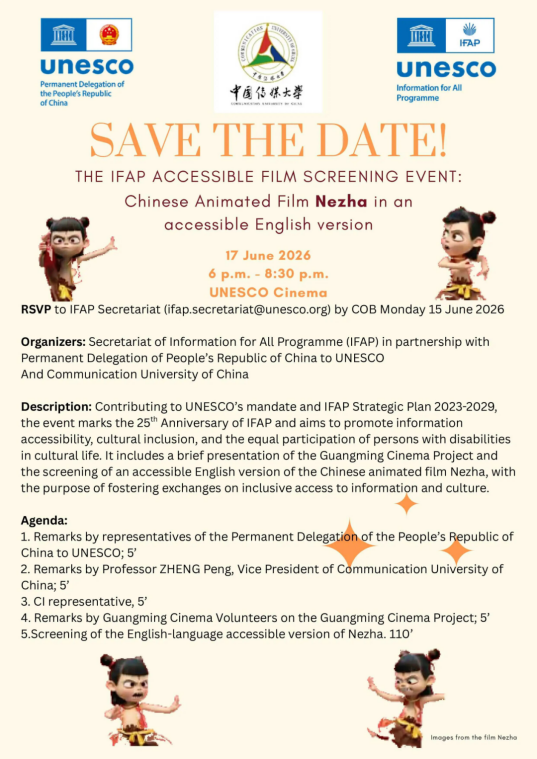
Following the workshop, a special barrier-free screening organized by "Guangming Cinema" was held at the UNESCO headquarters cinema.
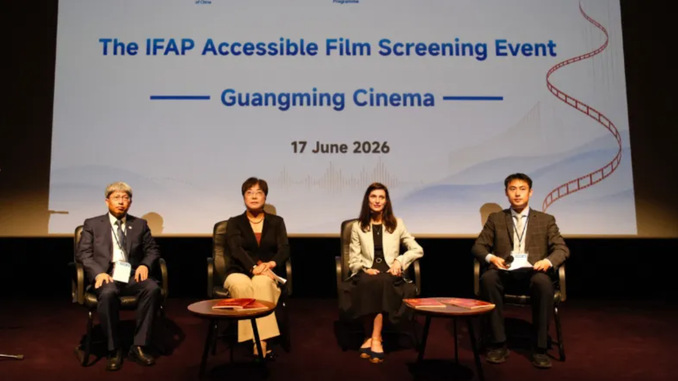
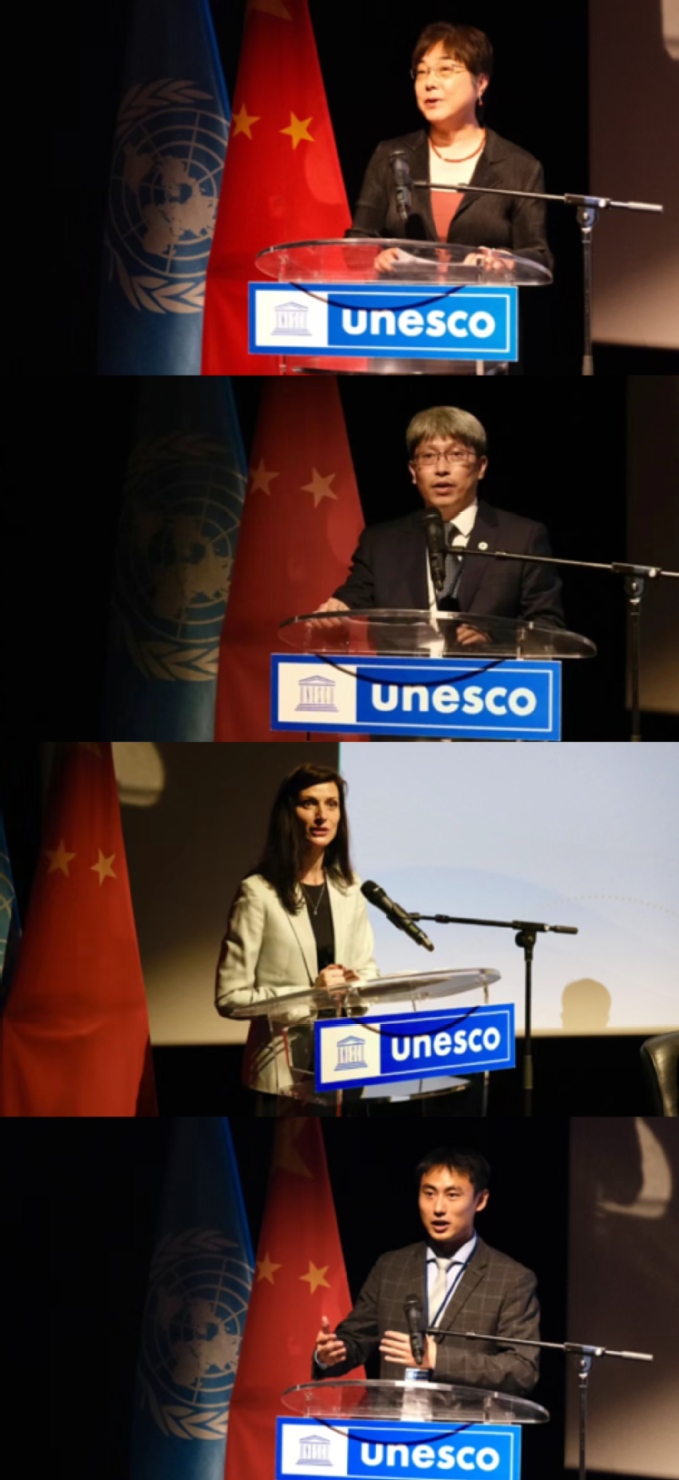
The event was moderated by Guilherme Canela. Opening remarks were delivered by Yang Xinyu, Ambassador and Permanent Delegate of China to UNESCO; Zheng Peng, Deputy Secretary of the Party Committee of the Communication University of China (CUC); and Mariya Gabriel, Assistant Director-General for Communication and Information at UNESCO. Chen Zhongrui, a faculty member from the School of Television and Cinematic Arts at the Communication University of China (CUC), presented an overview of the 'Guangming Cinema' project.
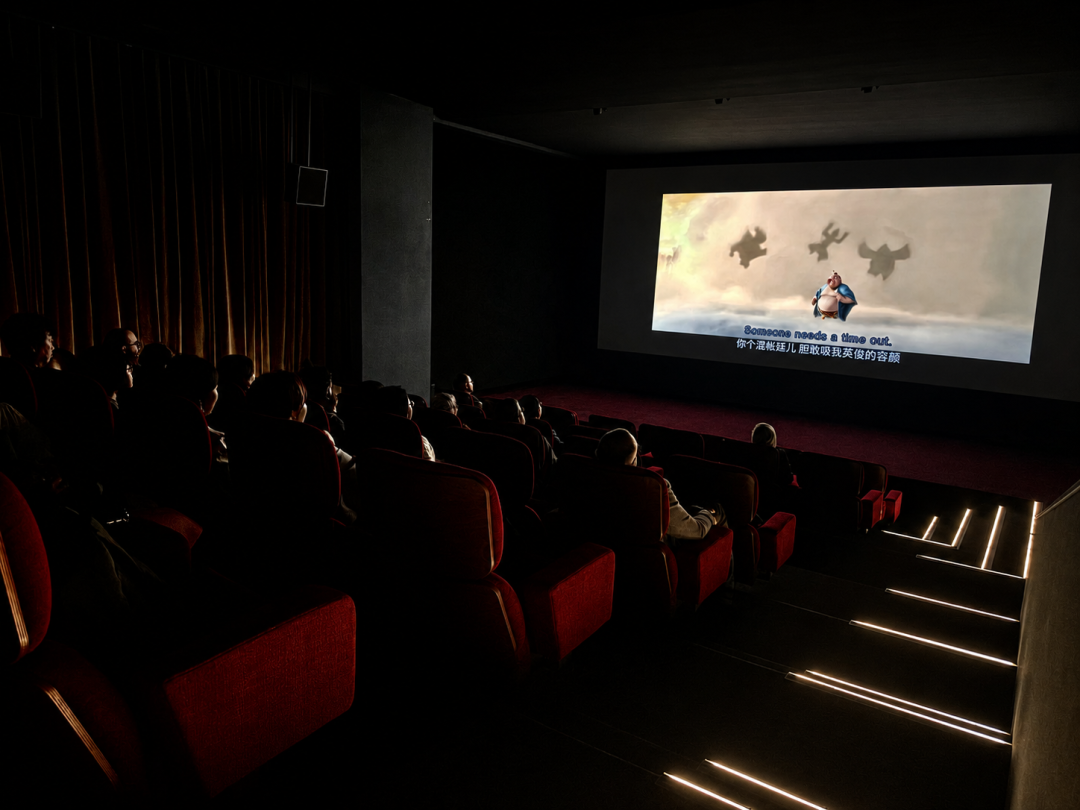
Screening of the English-language accessible version of the film "Ne Zha"
"Bright Cinema" is a non-profit accessibility film production and dissemination project long promoted by the Communication University of China (CUC). Since its launch in 2017, the project team has consistently transformed outstanding film and television works into accessible versions suitable for the visually impaired. By adding professional narration during gaps in dialogue and sound effects, the team converts character actions, scene changes, color imagery, and emotional rhythms into an audible, perceptible, and comprehensible vocal narrative, effectively paving a "cultural tactile path" to the art of cinema for the visually impaired. To date, the project has completed the production of over 800 accessible films, two accessible TV series, and one accessible animated series. It has attracted nearly a thousand faculty and student Volunteers to participate, providing sustained non-profit cultural services for the visually impaired community.
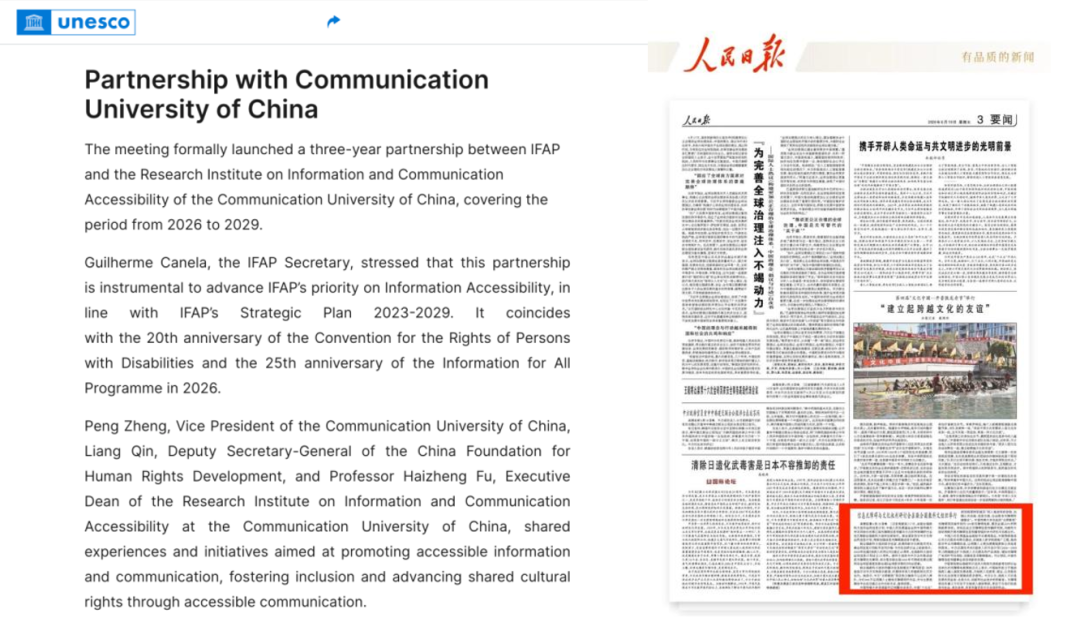
This workshop has garnered extensive attention from media outlets both at home and abroad. Major media organizations, including Xinhua News Agency, People's Daily, China Media Group, China Daily, and China News Service, reported on the opening of the workshop and the launch of the three-year cooperation mechanism. The official website of UNESCO also featured a special report on the meeting, speaking highly of the fruitful work the two sides have done in the fields of information accessibility and the protection of cultural rights.
This document was translated by an AI large language model.
Editor: Fang Yiran